
Mitsubishi Electric announced that it will begin shipping samples of two new SLIMDIP series power semiconductor modules for room air conditioners and other home appliances, the Full SiC SLIMDIP (PSF15SG1G6) and the Hybrid SiC SLIMDIP (PSH15SG1G6), on April 22. Both modules, the first SiC versions in the company's SLIMDIP series of compact, terminal-optimized modules, achieve excellent output and power loss reduction for energy savings in small- to large-capacity appliances. They will be exhibited at Power Conversion Intelligent Motion Expo & Conference 2025 in Nuremberg, Germany from May 6 to 8, as well as trade shows in Japan, China, and other countries.
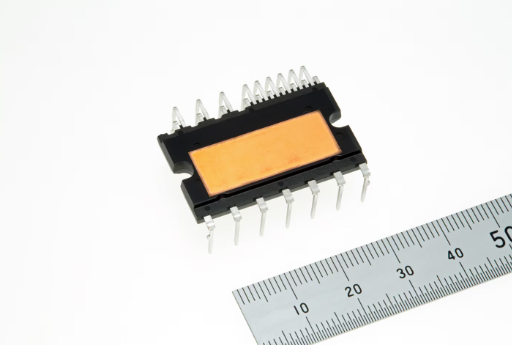
Mitsubishi Electric's newly developed silicon carbide metal-oxide-semiconductor field-effect transistor chip is incorporated into both new SLIMDIP packages. Compared to current silicon -based reverse-conducting insulated-gate bipolar transistor SLIMDIP modules, these new SiC modules achieve higher output for larger-capacity appliances.
ADVERTISEMENT

Additionally, compared to the Si-based module, power loss is reduced by 79% with the Full SiC SLIMDIP and by 47% with the Hybrid SiC SLIMDIP for more energy-efficient appliances. With these two new modules as well as existing Si-based RC-IGBT SLIMDIP modules, the SLIMDIP series now offers three options for use in inverter boards of appliances such as room air conditioners, each one suited to specific electrical capacity and performance needs, but all offered in the same package to help reduce the burden of designing inverter substrates.
ADVERTISEMENT
The next steps for Mitsubishi Electric's Full-SiC and Hybrid-SiC SLIMDIP modules include beginning sample shipments on April 22, showcasing the modules at the Power Conversion Intelligent Motion Expo & Conference 2025 in Nuremberg, Germany from May 6 to 8, and displaying them at various trade shows in Japan, China, and other countries. Mitsubishi Electric will gather feedback from initial customers and make any necessary optimizations to the modules based on this feedback. Following successful sample evaluations and optimizations, the company will move towards mass production and a broader market launch. These steps aim to ensure the modules meet customer needs and perform optimally in real-world application
For more information, please visit www.MitsubishiElectric.com.