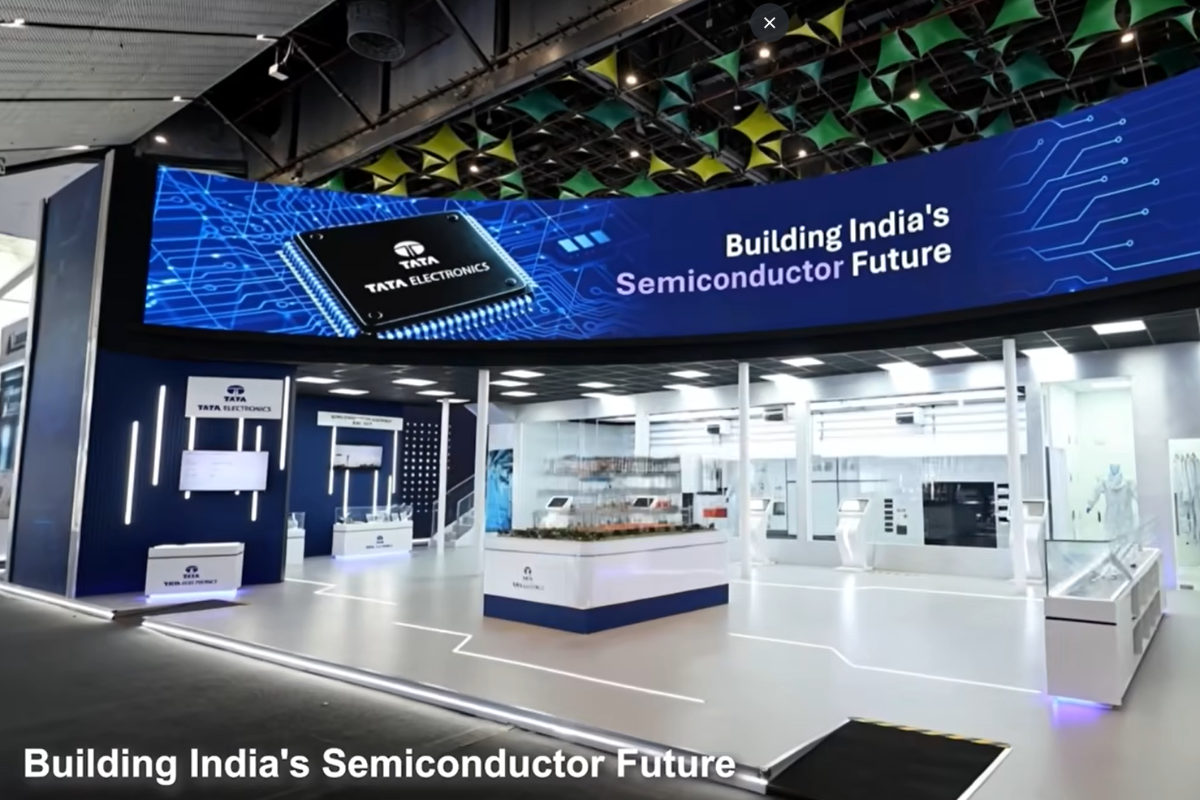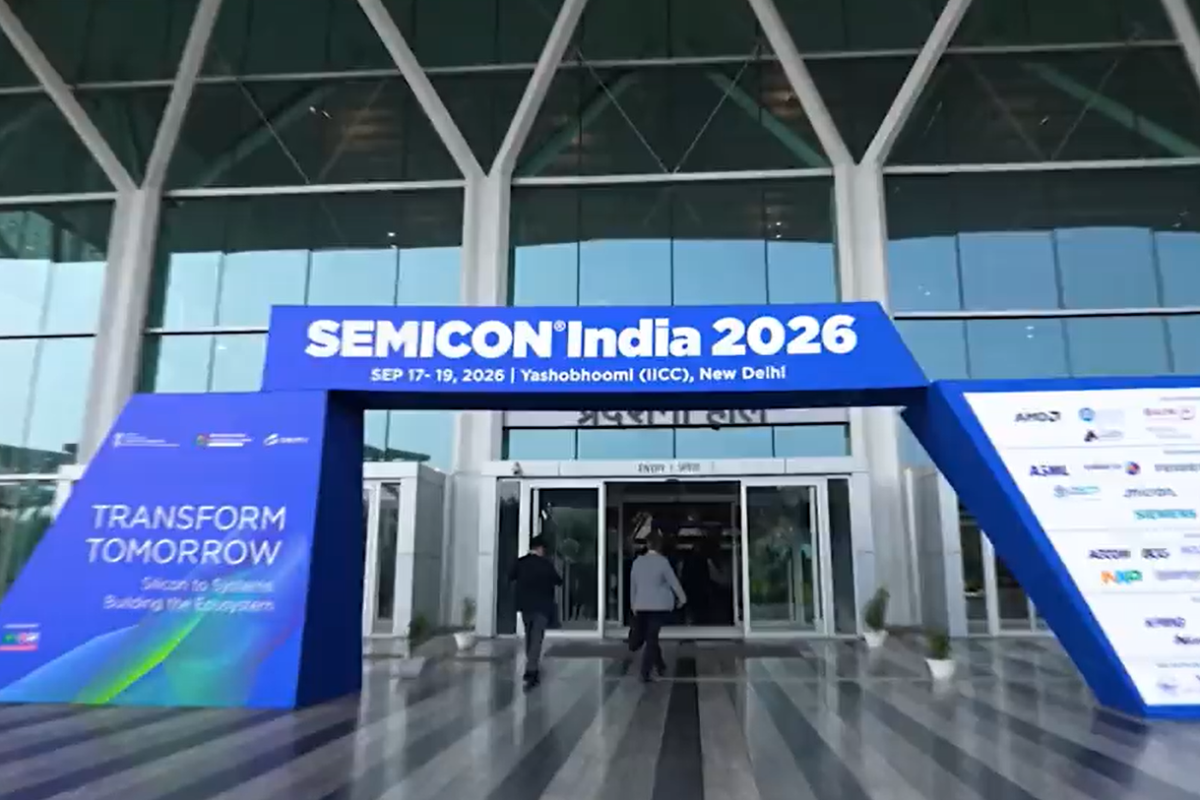

India's semiconductor manufacturing ecosystem is gaining momentum, driven by a surge in private investments from prominent Indian business leaders and robust government support. As the country aims to reduce import dependence and capitalize on geopolitical supply chain diversification, the sector is poised for significant growth, with the domestic market projected to reach $63 billion by 2026 and potentially $100-110 billion by 2030.
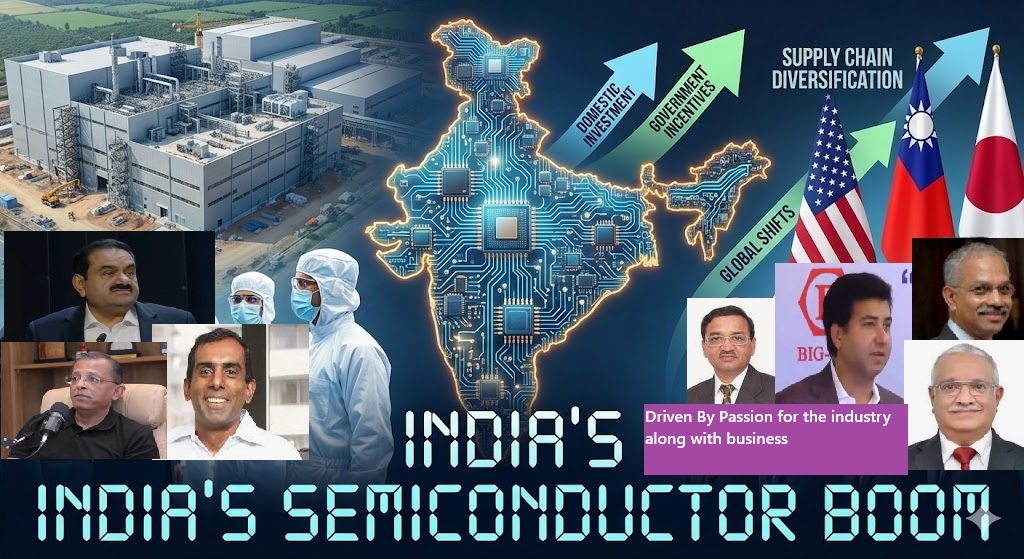
The India Semiconductor Mission (ISM), launched in 2021 with a ₹76,000 crore outlay, has approved 10 projects totaling around ₹1.6 lakh crore in investments across six states. These include fabrication plants, outsourced semiconductor assembly and test (OSAT/ATMP) facilities, and compound semiconductor units. Key milestones in 2025 included the inauguration of pilot lines, with commercial production from several facilities expected in 2026. In this article we try to list top investor persons who have invested in this high-risk semiconductor space. We noticed a wave of domestic entrepreneurs and conglomerates is fueling this growth, often diversifying from traditional sectors.
- Gautam Adani (Adani Group) is building India's largest integrated solar manufacturing hub in Mundra, Gujarat, targeting 10 GW capacity by mid-2026, including upstream silicon (polysilicon, ingots, wafers) critical for solar and potential semiconductor applications.
- The Murugappa Family (through CG Power) has invested ₹7,600 crore in an OSAT facility in Sanand, Gujarat, with a pilot line inaugurated in 2025 and commercial production ramping up in 2026.
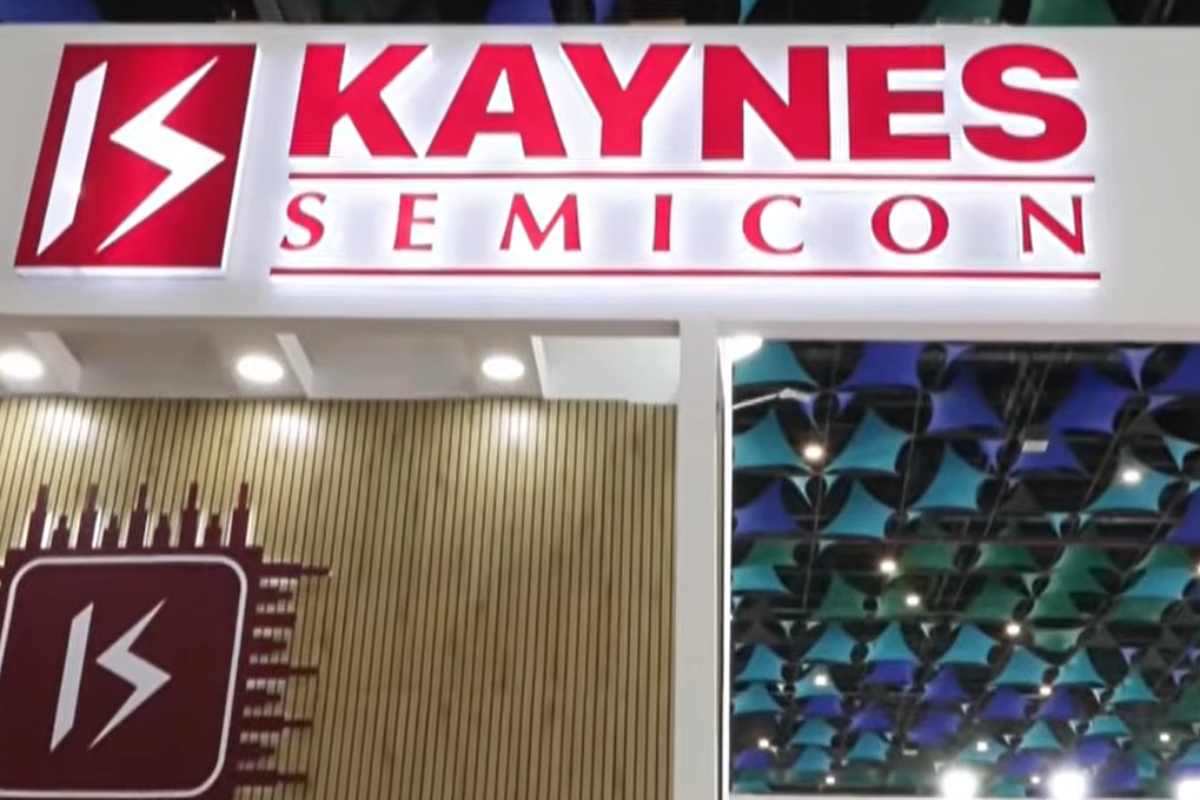
- Ramesh Kunhikannan (Kaynes Technology) is advancing OSAT capabilities in Sanand.
- Entrepreneurs like Raja Manickam (iVP Semiconductor), Amrit Manwani (Sahasra Semiconductors), Ashok Mehta (Suchi Semicon), Ujjwal Munjal (Hero Electronix/Tessolve), Rajendra Chodankar (Sachin Tendulkar backed RRP Electronics), Roshni Nadar Malhotra (HCL-Foxconn JV), Sumant Sinha (ReNew upstream silicon), P. R. Ramasubrahmaneya Rajha (Archean/SiCSem for SiC in Odisha), and Venkata Simhadri (ASIP Technologies) are leading niche OSAT, compound, and packaging projects.
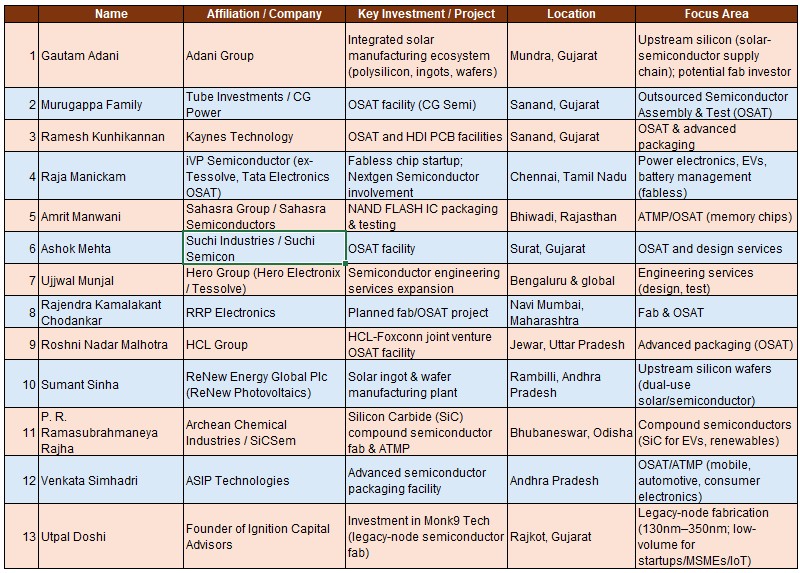
Special Mention: Utpal Doshi - Founder - Ignition Capital Advisors, has taken the highest risk by investing into Monk9 led by Marmik Bhatt, a company based in tier 2 city: Rajkot, Gujarat. Monk9 still has not leveraged any ISM investment incentives.

These investors, many serial entrepreneurs or family-led groups, are leveraging ISM incentives to establish facilities, creating thousands of jobs and fostering ancillary ecosystems.
Strong Government Support Fuels Progress
The government's Semicon India Programme offers up to 50% fiscal support for fabs, display fabs, compound semiconductors, and ATMP/OSAT units. Additional schemes like Design Linked Incentive (DLI) support chip design startups. State governments provide land, power subsidies, and infrastructure, clustering projects in Gujarat, Assam, Uttar Pradesh, Odisha, and Andhra Pradesh.
In 2025, four new units were approved, pushing cumulative investments higher. Pilot productions have begun, with commercial-scale output from CG Power, Kaynes, and others slated for 2026.
Booming Local Market and Geopolitical Tailwinds: India's semiconductor consumption is driven by smartphones, EVs, IT, and AI, with demand expected to triple from earlier levels. Geopolitically, US-China tensions and initiatives like the US CHIPS Act have prompted supply chain diversification, positioning India as a trusted alternative. Partnerships with Taiwan, Japan, and the US enhance technology access.
Risks and Challenges Ahead: Despite progress, challenges persist: high capital intensity, talent shortages (global need for 1 million professionals by 2030), underdeveloped supply chains for materials/equipment, infrastructure gaps (water, power), and rapid technology evolution. Delays in some projects highlight execution risks.
With production ramping in 2026, India is transitioning from a design powerhouse (20% of global talent) to a manufacturing hub. Sustained investments, skill development, and policy continuity could capture significant global share, bolstering economic resilience and self-reliance. As one industry leader noted, 2026 marks India's "now or never" moment in semiconductors.