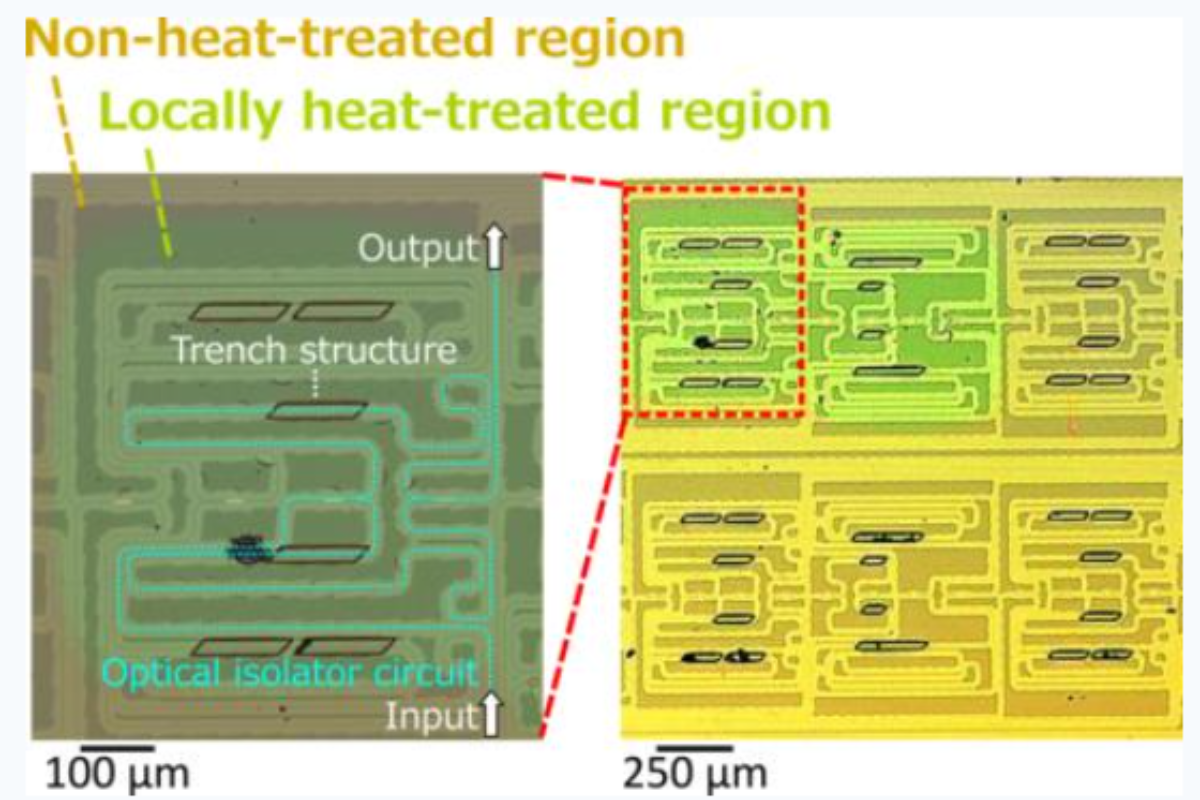

A study published in the IEEE Journal of Selected Topics in Quantum Electronics describes a new AI acceleration platform using photonic integrated circuits (PICs). Led by Dr. Bassem Tossoun of Hewlett Packard Labs, the research focuses on improving scalability and energy efficiency for AI workloads compared to GPU-based systems.
AI systems, driven by deep learning and large datasets, require significant computational power. Current GPU-based infrastructure faces challenges with energy consumption and scalability. The study introduces a platform based on optical neural networks (ONNs), which use light to process data, reducing energy loss compared to electronic distributed neural networks (DNNs).

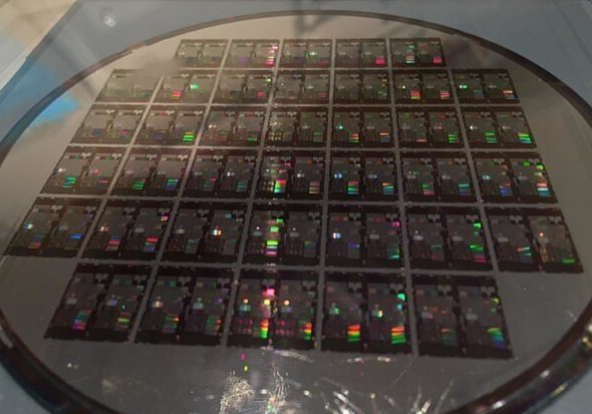
Dr. Tossoun notes, “Silicon photonics are manufacturable but challenging to scale for complex circuits. Our platform integrates III-V compound semiconductors to support photonic accelerators with improved scalability and energy efficiency.”

The platform was built using silicon-on-insulator (SOI) wafers with a 400 nm-thick silicon layer. The process involved lithography, dry etching, and doping to create metal oxide semiconductor capacitor (MOSCAP) devices and avalanche photodiodes (APDs). Silicon and germanium layers were grown for APD components, and III-V semiconductors, such as indium phosphide (InP) or gallium arsenide (GaAs), were bonded to the silicon platform via die-to-wafer bonding. A gate oxide layer (Al₂O₃ or HfO₂) and a dielectric layer were added for device efficiency and thermal stability.
This method allows integration of components like on-chip lasers, optical amplifiers, photodetectors, modulators, and phase shifters on a single photonic chip to form an optical neural network.
Implications
The platform aims to address energy and computational challenges in data centers. A 2024 International Energy Agency report states that data centers consume about 2% of global electricity, with usage expected to double by 2030 due to AI growth. The photonic platform could reduce energy demands and support larger AI workloads.
Industry Context
The study aligns with ongoing research in photonics for AI and high-performance computing. Companies like Lightmatter and Ayar Labs are developing photonic chips to lower latency and power use. Hybrid electronic-photonic systems and advancements in III-V semiconductors are also being explored, with some prototypes showing energy savings over GPU systems. Silicon photonics is further applied in telecommunications and quantum computing.
Future Outlook
The platform may support future AI hardware needs by improving energy efficiency and scalability. Ongoing research could optimize photonic chip designs, and collaborations may aid deployment in data centers.
Reference:
Title: Large-Scale Integrated Photonic Device Platform for Energy-Efficient AI/ML Accelerators
Journal: IEEE Journal of Selected Topics in Quantum Electronics
For more details, visit IEEE Photonics Society.