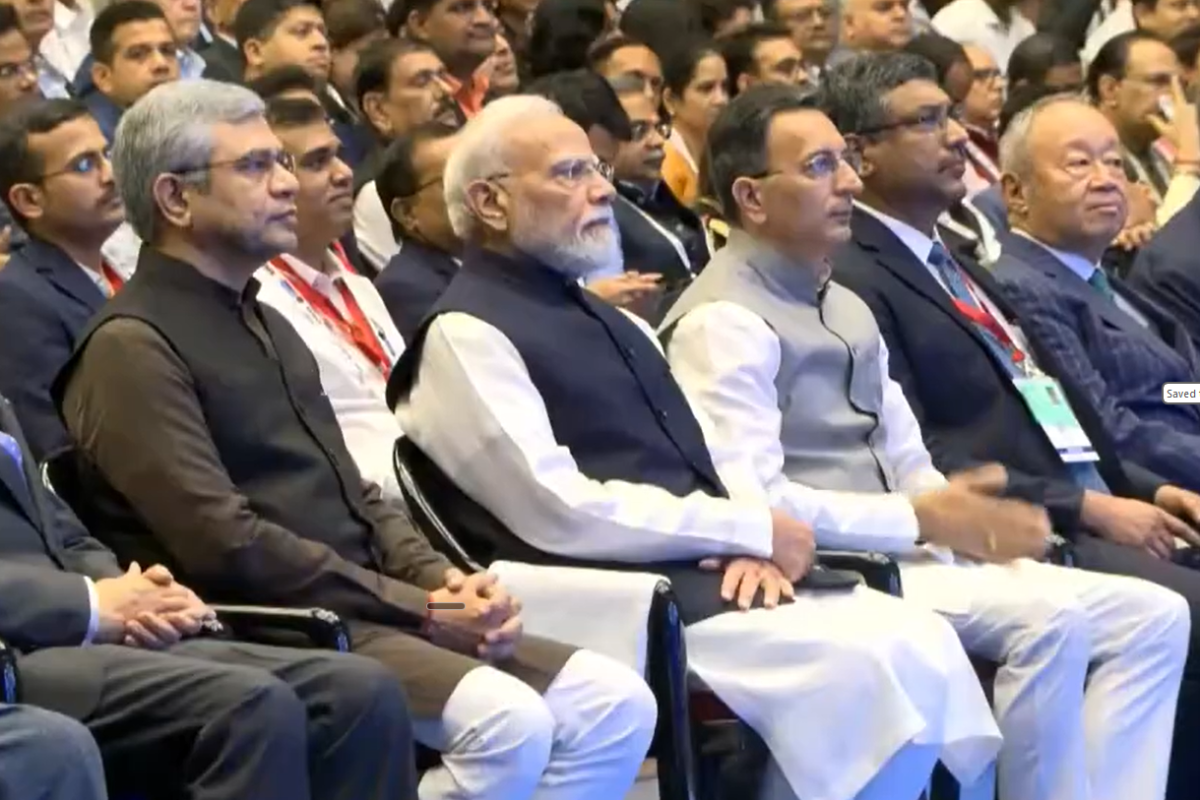
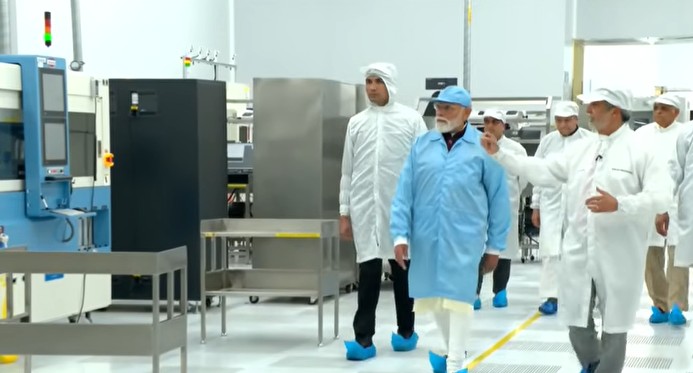
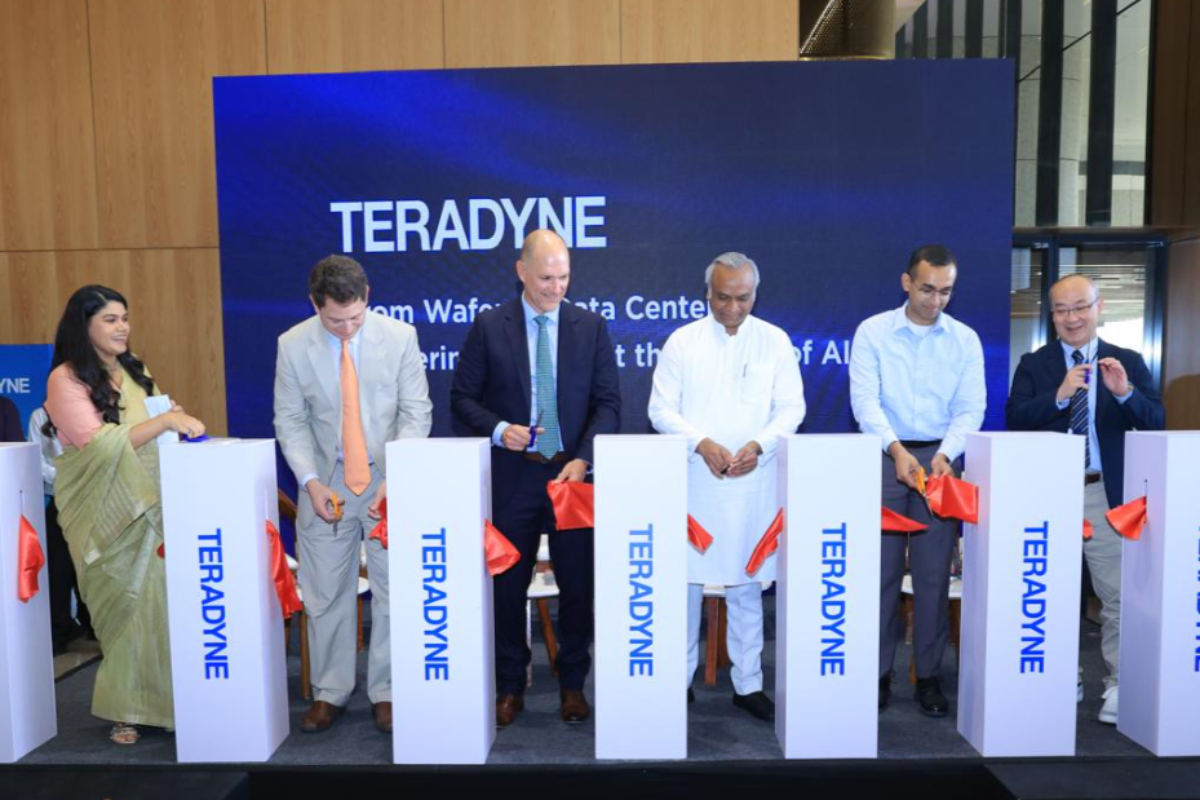
Prime Minister Narendra Modi inaugurated SEMICON India 2026 at Yashobhoomi in New Delhi on Thursday in the presence of global and Indian senior business leaders from semiconductor material, equipment, fab and related businesses. The three-day conference and exhibition, running from September 17 to 19, 2026, focuses on advancing collaboration, investment, innovation and talent development in India under the theme “Silicon to Systems: Building the Ecosystem.”
The event has brought together over 600 exhibitors, 300 international companies and delegations from more than 50 countries. It features six country pavilions representing Japan, South Korea, Malaysia, Netherlands, Singapore and Sweden, twelve State Government pavilions and a dedicated Startup Pavilion. Participants include global and Indian companies, policymakers, investors, researchers, start-ups, academic institutions and students from across the semiconductor and electronics value chain.
Speaking at the inauguration, Prime Minister Modi said that India’s economy is growing and global trust in India is also growing. He stated that despite the challenging global environment, India recorded a growth rate of 7.8 per cent, and Japan’s credit rating agency upgraded India’s sovereign rating. He said every citizen of the country is working with a commitment to build a developed India and that India’s semiconductor ecosystem is expanding rapidly, opening new opportunities for innovation, investment and growth.
Mr Modi said India is taking every step needed to become a preferred destination for the semiconductor industry and that the world is looking for new and trusted manufacturing destinations. He noted that chips manufactured in India are now available within the country and around the world. He highlighted that commercial production began recently at two semiconductor plants in Mohali and Surat, adding that it is not easy for any country to reach this stage.
Prime Minister Modi said India Semiconductor Mission 2.0 expanded the outlay to 13.5 billion US dollars from eight billion US dollars in the first phase. He stated that so far 12 chip-making projects have been approved and that this number will further increase in the next phase. He also referred to the recently held BRICS Summit in New Delhi, saying India successfully hosted the summit in which the New Delhi Declaration was adopted with the consensus of every member country, describing it as another major testament to the world’s trust in India.
Mr Modi said India is a new and trustworthy location for electronics manufacturing and urged global chipmakers to consider the country’s potential in the context of the weaponisation of supply chains. He stated: “This is not a sector where you set up a factory and the job is done. Wherever semiconductor ecosystems have been built in the world, the entire ecosystem has come together only after decades of hard work. But India, with your cooperation, has worked simultaneously on chip design, manufacturing, equipment manufacturing, the materials ecosystem, testing capability, and has demonstrated success.”
He added: “India is the mother of democracy. When such a country succeeds in a critical industry, it strengthens the supply chain of the entire world. And today, when supply chains are being weaponised, its importance becomes much greater. We should also look at this development taking place in India from this larger perspective.”
Prime Minister Modi said the foundation has already been laid for next-generation technologies including compound semiconductors and silicon photonics, which are essential for AI-enabling infrastructure. He noted that extensive policy reforms have been implemented to support end-to-end chip design, manufacturing and assembly, and urged leaders of equipment companies present not to miss the opportunities. He also said the government has set a target to train one lakh engineering students for the semiconductor industry and has already trained over 70,000 of them, calling on youth conducting research in India or abroad to participate in the development of advanced technology in the country.
Union Minister of Electronics and IT Ashwini Vaishnaw said India had wanted to establish a semiconductor industry for several decades, but it was possible only under the leadership of Prime Minister Narendra Modi. He stated that the foundation has now been laid and the next step is to build the industry through Semicon 2.0, which focuses on six major pillars: semiconductor design, machines and materials, memory, silicon, compound and logic fabrication units, and research and development. He said the government has set a target to support at least 200 startups and companies to design chips in India across the spectrum of semiconductor requirements. He also said the government is targeting one lakh people to be trained who will be employed in the factories coming up in India, creating a global pool of talent.
SEMI CEO Ajit Manocha estimated that the semiconductor industry would cross $1.3 trillion this year and $2 trillion by 2030. Applied Materials committed to invest $5 billion over the coming five years to expand its R&D centre and supply chain. Micron CEO Sanjay Mehrotra said: “Earlier this year, we began commercial production at Sanand. Our current production capacity already exceeds the memory required for India’s entire laptop market. The India Semiconductor Mission, and now ISM 2.0, gave this industry a foundation it did not have before.”
Infineon CEO Jochen Hanebeck called India a market of tremendous importance and noted the pace of progress across the Indian ecosystem. He said his firm increased hiring in India by 28 per cent and sees potential for India to strengthen its position across the global semiconductor value chain. Merck’s electronics CEO Benjamin Hein said: “India is evolving from a major chip consumer and chip design hub into a full-stack global semiconductor powerhouse.”
Lam Research COO Sesha Varadarajan announced that the firm would invest ₹10,000 crore to establish its first silicon component manufacturing facility in the country and is increasing partnerships with suppliers across India in specialised materials, precision components, gases, chemicals, metrology and manufacturing services. Wayne Allan of ASML said India will become increasingly important globally as the chip ecosystem develops further.