
Navitas Semiconductor has signed a definitive agreement to acquire Claros, a power management company developing vertical power delivery (VPD) and integrated voltage regulator (IVR) technology for next-generation AI data centers, in a deal valued at up to roughly $232.8 million, based on Navitas closing share price on August 21, 2026.
The acquisition is intended to extend Navitas AI infrastructure portfolio all the way from the electrical grid to the processor itself, bringing in VPD and IVR technology capable of directly powering the high-current, high-speed processors, referred to broadly as xPUs, at the core of modern AI systems.
Navitas frames the deal as addressing a growing problem in AI hardware: today's most advanced xPUs, including GPUs, CPUs, TPUs, NPUs, and other accelerators, are increasingly limited not by raw compute capability but by how power actually gets delivered to the chip. The industry's move toward 800V high-voltage direct current (HVDC) architecture, a shift toward replacing silicon with GaN and silicon carbide power components that's central to Navitas' broader "Navitas 2.0" strategy, has already helped by enabling denser power systems at the rack level. But at the final stage, traditional voltage regulator modules move power sideways across a circuit board, and as xPUs demand thousands of amps with near-instant response times, that lateral approach runs into what Navitas calls a "power wall," limiting overall system bandwidth and performance.
By combining with Claros, Navitas expects to address that power wall across the entire chain from grid to chip. Claros' VPD and IVR technologies combine power conversion, drive circuitry, control systems, and passive components into a single compact package. By placing this module directly beneath or inside the chip package or circuit board, power only needs to travel millimeters rather than inches, resulting in much faster response to sudden power demand changes, significantly lower electrical impedance, higher efficiency at the very low voltages modern chips use, and the power density needed to support next-generation AI compute. Navitas says this technology complements its existing GaN and high-voltage/ultra-high-voltage silicon carbide product lineup, which supports the 800V HVDC architecture, extending high-density AI rack power delivery from the early conversion stages all the way down to the processor core.
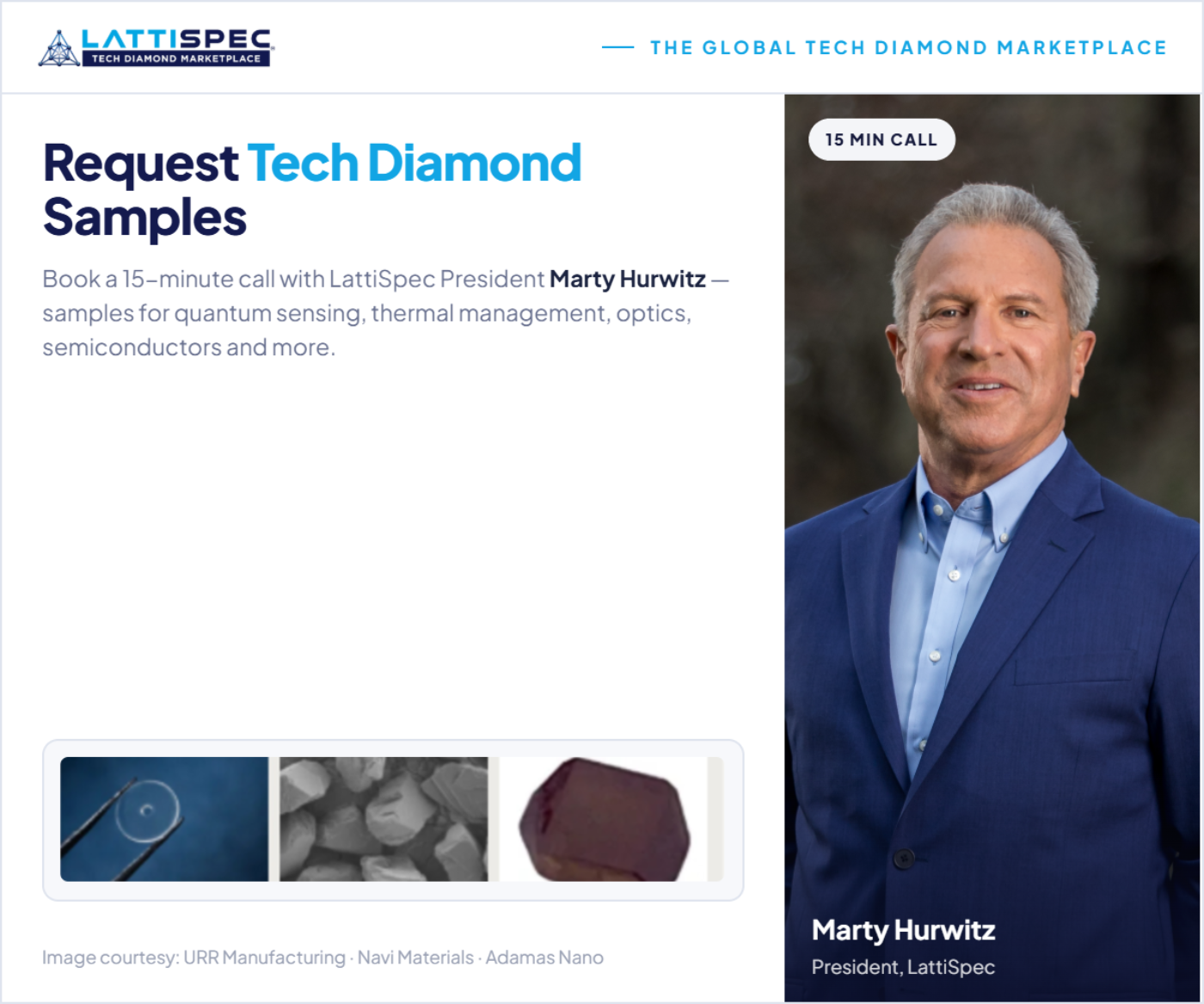
Chris Allexandre, president and CEO of Navitas, said the future of AI depends on delivering thousands of amps to increasingly power-hungry processors with unprecedented speed and precision, and that the power wall currently limits next-generation xPUs in megawatt-scale server racks from reaching the next level of AI performance. He said combining Claros' VPD and IVR technology with Navitas' GaN and high/ultra-high-voltage SiC portfolio breaks through that power wall, advancing the entire power chain from grid to chip. He described the acquisition as following Navitas' broader Navitas 2.0 transformation, significantly expanding the company's addressable market, deepening its relationships with hyperscalers and AI power platform providers, and strengthening its position in AI infrastructure both in terms of technical capability and product offerings.
Dan Kultran, co-founder and CEO of Claros, said that since launching the company in 2024, Claros has worked to rapidly redefine how AI data centers handle power. He described Navitas as an ideal partner for building a complete grid-to-xPU power portfolio, deepening relationships with major xPU and power customers, and accelerating Claros' next phase of growth, noting that the two companies share a fast-paced, innovative culture and a shared commitment to advancing power technology. He said Claros' integrated voltage regulator technology brings power conversion within millimeters of the xPU, reducing losses from distributing power across the board, lowering heat generation, and improving the efficiency of power delivery at the processor level, which he said can enable higher compute density, lower operating costs, and more efficient deployment of next-generation AI infrastructure.
Together, Navitas says Claros' VPD and IVR technology broadens its engineering and intellectual property capabilities, adding deep expertise in digital control, passive component integration, advanced 2D and 3D chip packaging, and leading-edge power and analog mixed-signal technology, while also adding standalone digital and controller products that complement Navitas' existing GaN lineup.
Once completed, the acquisition is expected to more than double Navitas' identified serviceable addressable market (SAM) for 2030 to over $8 billion, adding at least $3.5 billion from the fast-growing VPD and IVR markets. Combined with Navitas' existing $3.5 billion SAM in GaN and high/ultra-high-voltage SiC, along with roughly $1 billion from its newer junction field-effect transistor technology, the acquisition is expected to significantly expand Navitas' opportunity across the full power chain from grid to xPU.
Navitas says its current short- to mid-term financial model and strategy under Navitas 2.0 remain unchanged, with Claros' VPD and IVR technology providing an additional growth driver starting around 2028-2029, alongside Navitas' existing organic growth in 800V HVDC GaN and SiC technology for AI infrastructure. The company says it remains committed to its path toward profitability and doesn't expect a material change to its previous timeline.
Under the terms of the merger agreement, Navitas will acquire Claros in a deal valued at up to approximately $232.8 million. Of that, roughly $216.0 million will be paid at closing through a combination of cash and shares of Navitas Class A common stock, with the remainder paid in additional shares upon Claros achieving certain business milestones over the two years following closing. The value of the stock portion of the deal was calculated based on Navitas closing share price of $12.97 on August 21, 2026.
Additionally, certain Claros employees who continue with the company will be eligible for performance-based compensation under Navitas' equity incentive plan, payable in shares of common stock valued at approximately $28.9 million based on that same reference price, contingent on meeting the same business milestones. The transaction has been unanimously approved by the boards of directors of both companies and is expected to close before the end of the year, subject to standard closing conditions, including required regulatory approvals.