
Diosdado P. Banatao, a Filipino engineer and entrepreneur known for contributions to semiconductor and personal computer technology, died on December 25, 2025, at Stanford Medical Center in California. He was 79 years old and passed away from complications related to a neurological disorder (dementia in some reports) that developed later in life. He was surrounded by family and friends at the time of his death, five months short of his 80th birthday.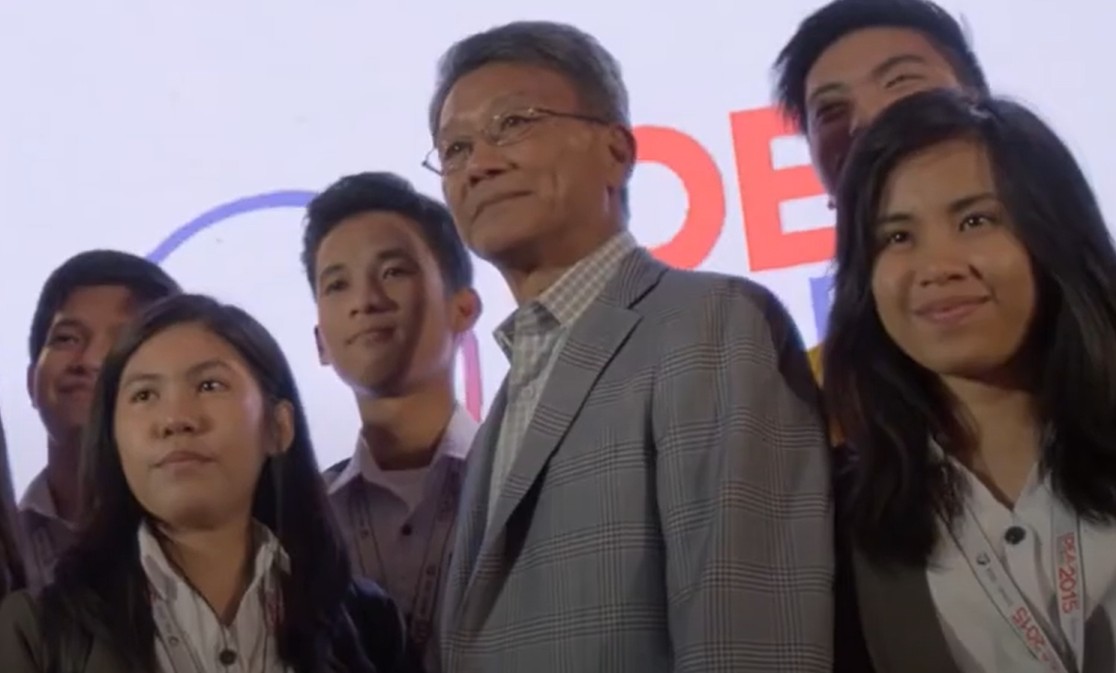
Born on May 23, 1946, in Iguig, Cagayan, Philippines, to a rice farmer father, Salvador Banatao, and housekeeper mother, Rosita Banatao, he grew up in humble circumstances and walked barefoot to Malabbac Elementary School. He completed secondary education at Ateneo de Tuguegarao and earned a Bachelor of Science in Electrical Engineering from Mapúa Institute of Technology, graduating cum laude.
After college, he declined job offers, including from Meralco, and worked as a trainee pilot for Philippine Airlines before joining Boeing in the United States as a design engineer on the Boeing 747. He later obtained a Master of Science in Electrical Engineering and Computer Science from Stanford University in 1972. During this period, he joined the Homebrew Computer Club, where he met Steve Jobs and Steve Wozniak.

Banatao worked at National Semiconductor, Intersil, and Commodore International, where he designed the first single-chip 16-bit microprocessor-based calculator. In 1981, while at Seeq Technology, he developed the first 10-Mbit Ethernet CMOS chip with silicon coupler data-link control and transceiver.
He co-founded Mostron in 1984 with Francis Siu, using $500,000 in start-up capital and hiring Ron Yara from Intel. In 1985, he co-founded Chips and Technologies (C&T), which developed chipsets compatible with IBM's PC/XT and PC/AT. C&T generated $12 million in revenue in its first four months and went public after 22 months. He is also credited with the local bus concept and one of the first GUI accelerator chips for personal computers.
In 1989, he co-founded S3 Graphics in Santa Clara, California, which focused on GUI accelerators and became a market leader by 1996, surpassing Cirrus Logic. S3 had an initial public offering of $30 million. Chips & Technologies was sold to Intel in 1989 for about $300 million.
In 2000, Banatao founded Tallwood Venture Capital with $300 million of his own capital. He was involved with SiRF, an early company to commercialize GPS technology after its declassification. In 2010, he became CEO of Ikanos Communications.
Banatao supported STEM education through initiatives such as the Philippine Development Foundation (PhilDev), the Banatao Family Filipino American Education Fund, professorial chairs and programs at the University of the Philippines under the Dado and Maria Banatao Institute framework, and the AIM–Dado Banatao Incubator at the Asian Institute of Management.
He is survived by his wife Maria Banatao, their children (including son Rey), and grandchildren. The family has indicated that details of a celebration of his life will be shared in the coming weeks.
Watch this interesting video: https://www.youtube.com/watch?v=vI9mYvIeqII&t=194s