
The Open Compute Project (OCP), a nonprofit standardizing data center hardware for companies like Meta and Microsoft, is addressing the growing demands of AI infrastructure through two key initiatives: the Open Chiplet Economy and a new Optical Circuit Switching (OCS) Subproject. CEO George Tchaparian warns that AI's unique requirements risk fragmenting the supply chain into costly proprietary silos, potentially driving up costs and hindering scalability.
Tchaparian noted that AI workloads differ significantly from virtualized and cloud-native applications, pushing the industry toward specialized infrastructure. Without standardized solutions, the race to build larger AI clusters could fracture the market. Projections indicate that AI and high-performance computing buildouts from 2024 to 2028 will significantly increase data center power consumption, leading to a sharp rise in carbon emissions.

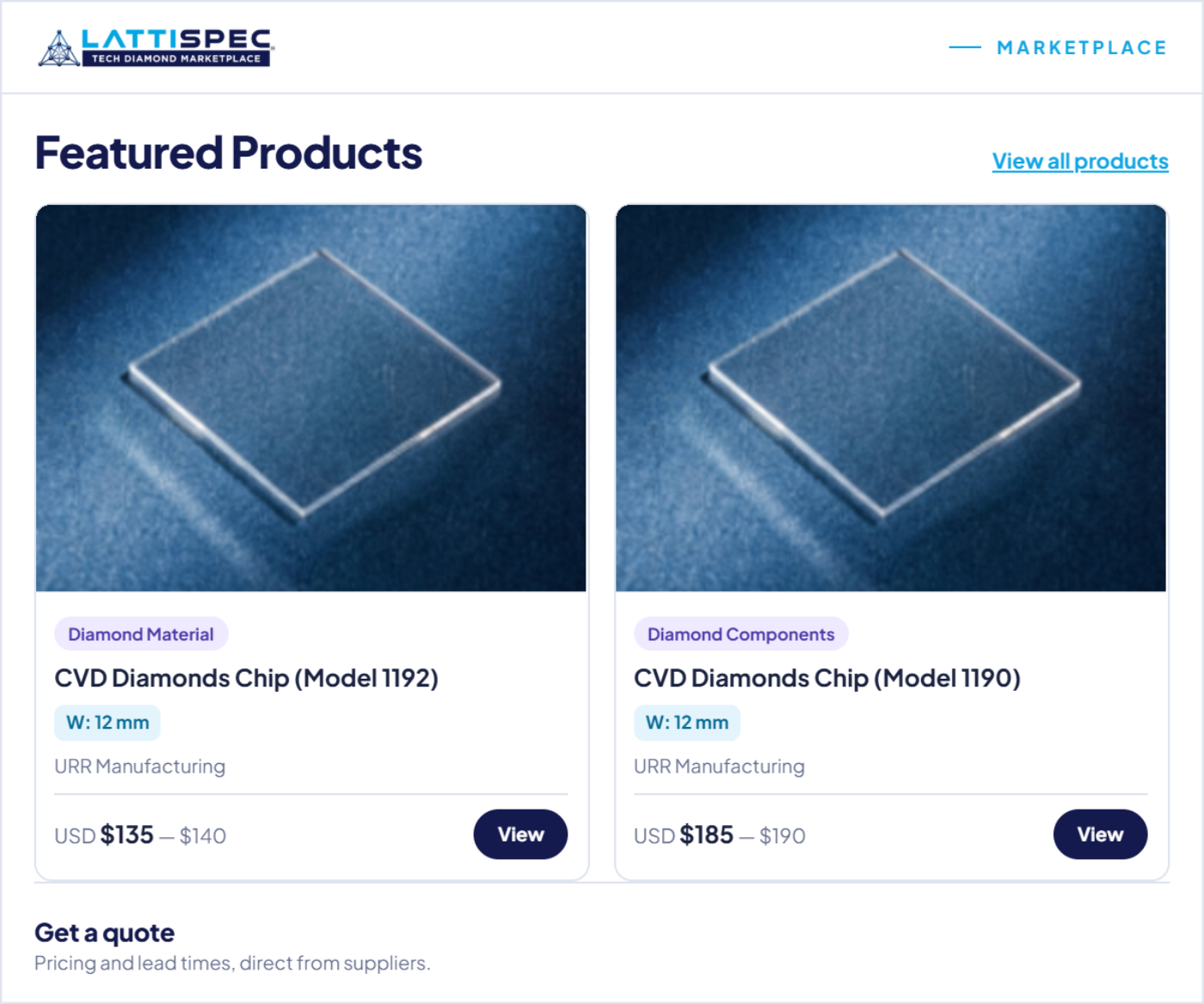
To counter this, OCP has launched the Open Chiplet Economy, a marketplace with over 25 chiplet suppliers to create an interoperable silicon ecosystem. This approach, modeled on OCP’s past server hardware standardization, aims to reduce costs and prevent vendor lock-in as AI clusters demand high compute density, including proposed 1-megawatt racks.
The OCS Subproject, co-led by iPronics and Lumentum with participants like Coherent, Google, Lumotive, Microsoft, nEye, NVIDIA, Oriole Networks, and POLATIS (HUBER+SUHNER), focuses on optical circuit switching to meet AI’s connectivity needs. Unlike electrical switching, OCS uses photonic technology to route data optically, reducing power consumption and improving reliability for large-scale AI workloads. It integrates with existing networking protocols and software-defined networking APIs, as explained by Peter Roorda of Lumentum. Daniel Pérez-López of iPronics highlighted that OCS enhances resource optimization, boosting performance and cutting costs.
Google, utilizing OCS in its Jupiter/AI network architectures and TPU systems via Project Apollo, is collaborating to define software interfaces like gNMI, gNOI, gNSI, and OpenConfig for interoperability, according to Ryohei Urata of Google Cloud. The OCS Subproject, now active on the OCP website with a wiki, mailing list, and community calls, will be presented at the OCP APAC Summit on August 5-6, 2025, in Taipei, Taiwan, during the Optical Communication Networks track, co-organized with IOWN Global Forum. Masahisa Kawashima of IOWN emphasized that optical infrastructure supports high-bandwidth, low-latency, and energy-efficient data transmission, extending infrastructure longevity and sustainability.
In the Asia-Pacific region, home to Taiwan’s semiconductor manufacturing hub, OCP’s 130+ APAC members are engaging with local organizations like ITRI and IOWN to address supply chain challenges. The 2025 OCP APAC Summit will feature discussions on next-generation data center infrastructure and emerging technologies, with an exhibit connecting buyers and vendors.
OCP is also addressing AI’s environmental impact through partnerships with iMasons to standardize carbon emission reporting for IT equipment and research into reducing concrete’s carbon footprint in data center construction. Tchaparian encourages organizations to participate in OCP’s collaborative process to access designs and influence standards, noting that engagement is critical as AI infrastructure demands grow. Major players like Nvidia, Intel, and AMD are involved in OCP’s Open Systems for AI initiative, launched in January 2024.