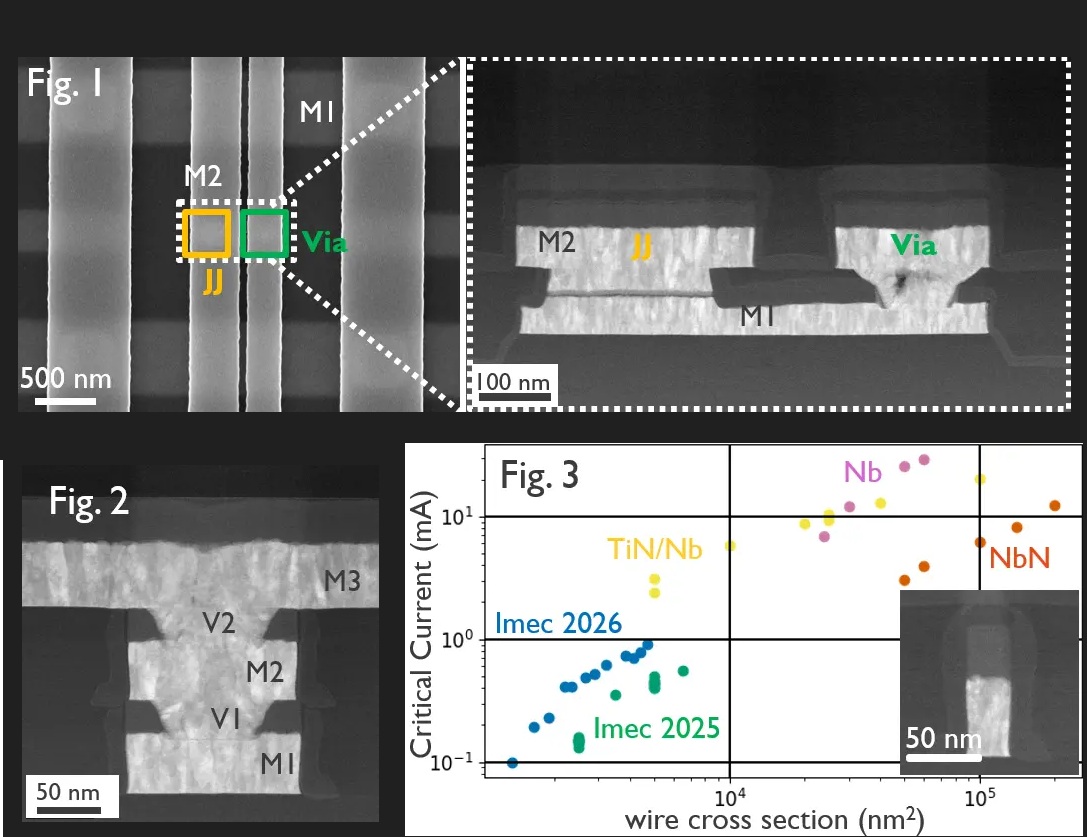

Xanadu announced a collaboration with Applied Material to develop the first 300 mm high-volume-compatible process for building superconducting transition edge sensors. These TESs are crucial components of photon-number-resolving detectors, which are essential for the qubit state preparation process in Xanadu's photonic quantum computers.

"Utility-scale quantum computers have exacting fabrication processing demands that require us to continually push what is possible in the fab. Applied Materials has been a tremendous collaborator for us over the years, and we are excited to continue working with them on new materials fabrication challenges," said Elliott Ortmann, Head of Fabrication Process Engineering at Xanadu. "Developing the first 300 mm process for TESs opens up the ability to leverage the most advanced fabrication tools to produce higher quality and better-performing devices."
"Applied Materials' collaboration with Xanadu is focused on developing scalable fabrication approaches that can create better quantum devices for the industry," said Dr. Robert Visser, Vice President of Engineering in the Office of the CTO at Applied Materials. "Xanadu's TES design requires advanced materials engineering and process control – areas where Applied brings decades of expertise with 300 mm semiconductor platforms."
This collaboration builds on previous work done jointly between Xanadu and Applied Materials, which focused on materials optimization of TES fabrication processes. Over the next year, the two teams aim to demonstrate the first 300 mm platform for building TESs for PNRs. Following a basic demonstration of the platform's capabilities towards the end of 2025, the teams intend to continue optimizing its performance to meet the demands of high-throughput and high-reliability fabrication before ramping up for mass manufacturing.