
University of Washington researchers have found that strain can change electrical resistance in twisted graphene more than 100 times the amount observed in an ordinary metal.
A 2018 study showed that when two sheets of carbon atoms are twisted to the “magic angle” of 1.1 degrees and cooled to near absolute zero, the material can become superconducting, a state in which electrons flow without resistance. Researchers have since explored how variables such as temperature, voltage and magnetic fields affect these moiré materials.

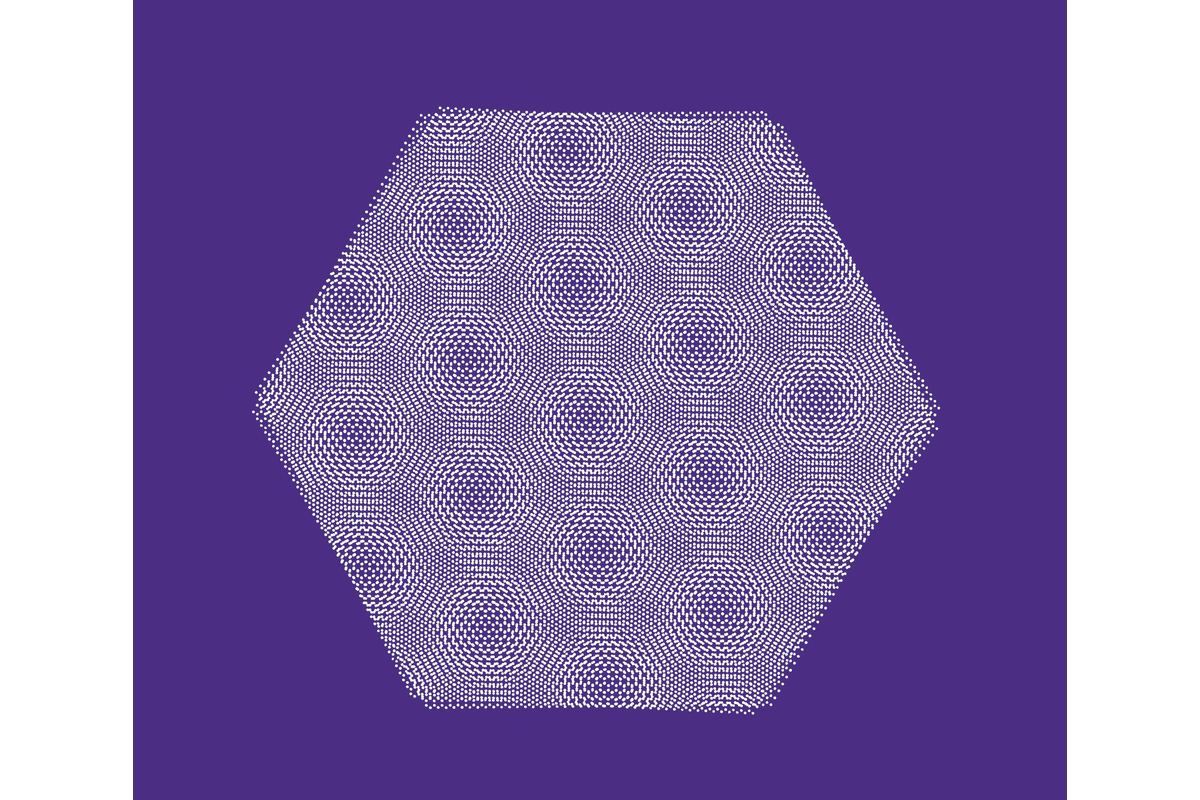
In a paper published in Science on November 12, 2026, the team reported that stretching and compressing the material produced large changes in its electrical resistance. The researchers attached the tiny flakes to a device that expands and contracts when voltage is applied, allowing them to continuously control strain in the atomic lattices. The effect was amplified when the sample was cooled to very low temperatures.

Matthew Yankowitz, a UW associate professor of both physics and materials science and engineering, said: “Atomically thin materials can host superconductivity, magnetism and other exotic quantum states. We’ve now added a fundamentally new way to manipulate them, by directly deforming the atomic lattice they live on. That enables experiments we simply couldn’t do before.”
Yankowitz and UW physics professor Jiun-Haw Chu plan to simplify the experiment so other researchers can reproduce it more easily and apply it to other atomically thin materials.