Semtech has announced full production availability of its mobile transport chip portfolio, designed to support 50G fronthaul connectivity for the next wave of 5G-Advanced radio deployments. Fronthaul refers to the network links connecting radio equipment on cell towers back to centralized processing units, and this announcement aligns with a broader industry shift toward 50G optical interfaces, reflected in Ericsson's AI-ready Massive MIMO and remote radio lineup announced at Mobile World Congress 2026, as well as Nokia's Doksuri Remote Radio Heads built on its latest ReefShark system-on-chip. Both are engineered to handle a surge in uplink data traffic driven by multi-modal AI, augmented reality, and generative AI applications running on mobile devices.
Cloud-assisted AI applications are reshaping how mobile network traffic flows. Industry forecasts, including projections published by the Mobile Optical Pluggables Alliance (MOPA), point to a 3x to 5x increase in required uplink capacity as devices increasingly offload demanding AI inference tasks to the cloud. This shift places particular strain on the fronthaul network, where the overhead involved in encoding uplink traffic leaves less room to grow, making 50G optical technology increasingly essential to fronthaul design.
Stefan Dahlfort, president of the Mobile Optical Pluggables Alliance, said the optical layer forms the foundation of the AI-era mobile network. He said that with operators and equipment vendors now committing to 50G fronthaul, the industry needs interoperable, high-volume chip solutions available today, and that Semtech's portfolio supports MOPA's technical blueprints and the broader rollout of 5G-Advanced.
Frank Chang, chief technology officer at Source Photonics, said bringing 50G optical modules to volume production requires close collaboration between module manufacturers and chip suppliers. He said Semtech's clock and data recovery (CDR) and transimpedance amplifier (TIA) portfolio gives Source Photonics the flexibility and performance needed to support the full range of fronthaul architectures its customers are deploying.
Raza Khan, director of wireless marketing within Semtech's signal integrity products group, said AI is rewriting the rules of mobile network traffic, with the uplink now one of the critical dimensions to address. He said that as the latest radio equipment moves to 50G interfaces, customers need a complete, qualified solution they can deploy immediately rather than a future roadmap promise, and that Semtech's wireless portfolio supports the various architectures the industry is currently building.
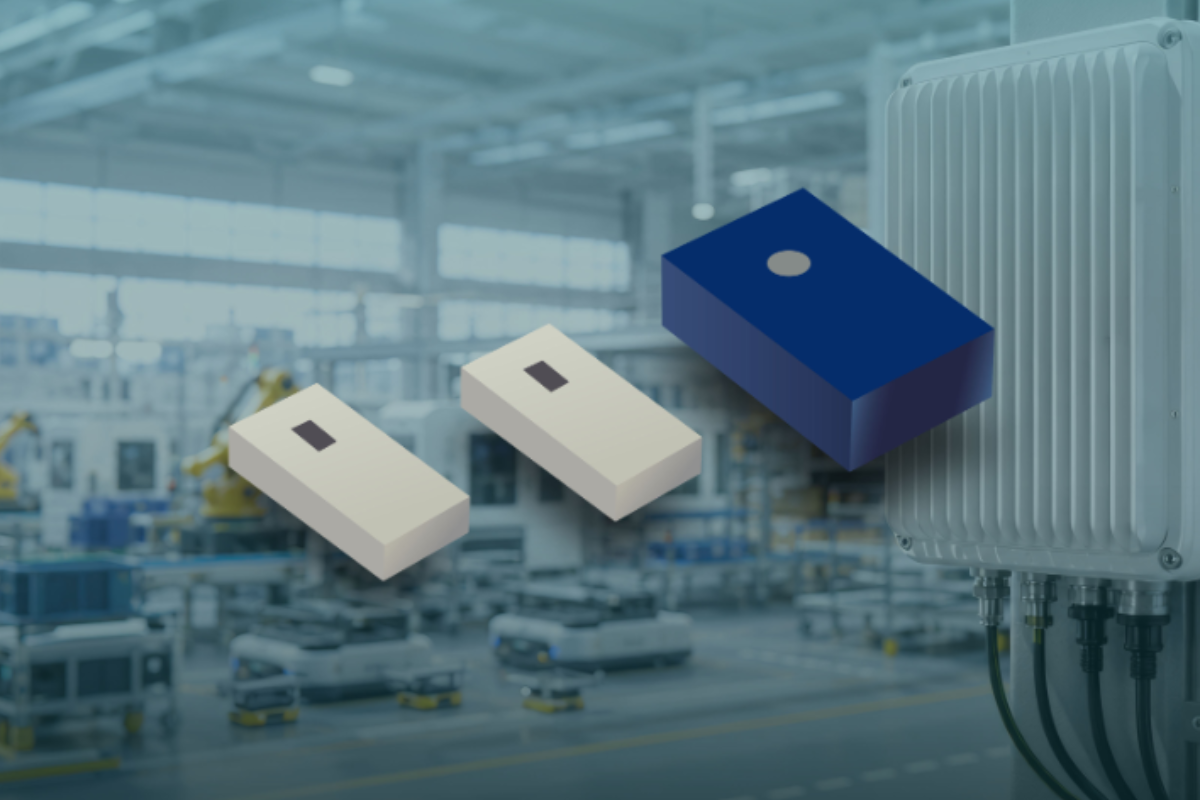
Now shipping in volume, Semtech's portfolio lets system vendors and network operators deploy the fronthaul architecture required by many of today's radio platforms. For 10km duplex links, the portfolio pairs the GN2255 clock and data recovery (CDR) chip with the GN1700TI transimpedance amplifier (TIA). For 15km bidirectional (BiDi) links, it pairs the GN2255S CDR with the GN1700TI TIA. For wavelength division multiplexing (WDM) and longer-reach architectures, it pairs the GN2256 CDR with the GN1700TI TIA.
Built on Semtech's ClearEdge, Tri-Edge, and FiberEdge product families, the portfolio supports 50G fronthaul deployments for 5G-Advanced today and is designed to scale toward 6G networks through 2030.
Semtech says it continues working with module partners and system vendors across the industry to support the ongoing transition to 5G-Advanced and, eventually, 6G. The company will be showcasing this portfolio at the European Conference on Optical Communication (ECOC) 2026, booth #2054, taking place September 21-23 in Málaga, Spain.