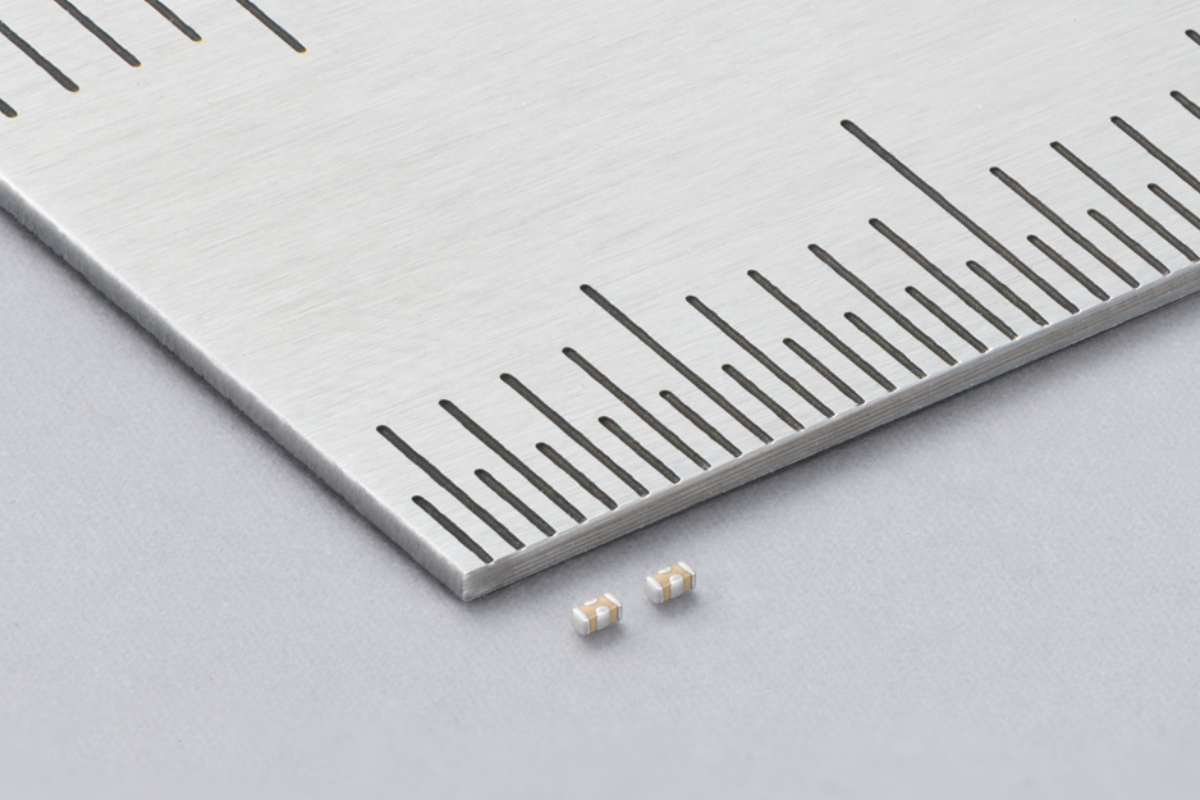

TDK has announced the expansion of its CGA series of automotive multilayer ceramic capacitors to include a new 10 μF, 100 V product in a compact 3225 case size (3.2 x 2.5 x 2.5 mm – L x W x H). This new MLCC offers the industry's highest capacitance for a 100 V rated product in this size and temperature characteristic, with X7R characteristics (Class II dielectric). Mass production of the product series began in April 2025.
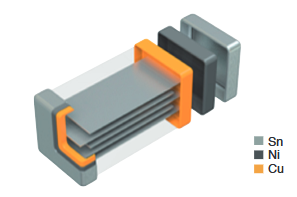

The main applications of TDK's new MLCCs include smoothing and decoupling of power lines for various 48 V automotive products. These capacitors offer a high capacitance of 10 μF in a compact 3225 size, which helps reduce the component count and enables the miniaturization of electronic sets. They are also highly reliable, having been qualified based on AEC-Q200 standards, ensuring their suitability for automotive applications.
Smoothing involves the process of charging and discharging high-capacity capacitors to reduce voltage fluctuations in rectified currents, making them smoother. Decoupling refers to the use of capacitors between IC power lines and ground to reduce voltage fluctuations by temporarily supplying current when the load changes drastically. AEC-Q200 standards are set by the Automotive Electronics Council for passive components used in automobiles.
The potential use cases for TDK's new MLCCs are extensive.
In Electric Vehicle power systems, these capacitors are ideal for Battery Management Systems due to their high capacitance and reliability, helping manage power flow and ensuring stable battery operation. They are also suitable for inverters and converters, where they smooth out voltage fluctuations and provide stable power to the electric motor and other components.
In Advanced Driver Assistance Systems, the high capacitance and compact size of these MLCCs make them perfect for radar and lidar systems, where they filter and stabilize the power supply, ensuring accurate and reliable operation. Additionally, they can be used in Electronic Control Units to decouple power lines and reduce noise, enhancing the performance and reliability of ADAS features such as adaptive cruise control and lane-keeping assist.
For Infotainment and Connectivity Systems, these capacitors are beneficial in automotive multimedia systems, stabilizing the power supply and reducing noise to ensure high-quality audio and video performance. They are also useful in telematics and connectivity modules, smoothing out power fluctuations and ensuring reliable operation of communication systems.
For more information, visit https://www.tdk-electronics.tdk.com