
AMD has introduced the AMD Helion agentic AI rack, an open blueprint for agentic AI infrastructure with CPU-only hyperscale and combined CPU/GPU enterprise configurations.
Based on an Open Compute Project (OCP) spec-design, Helion combines open hardware and software with an integrated token router that directs agents’ model calls across frontier and open-source models. Customers can match CPU performance, core density and power with GPU acceleration for the work their AI agents perform.

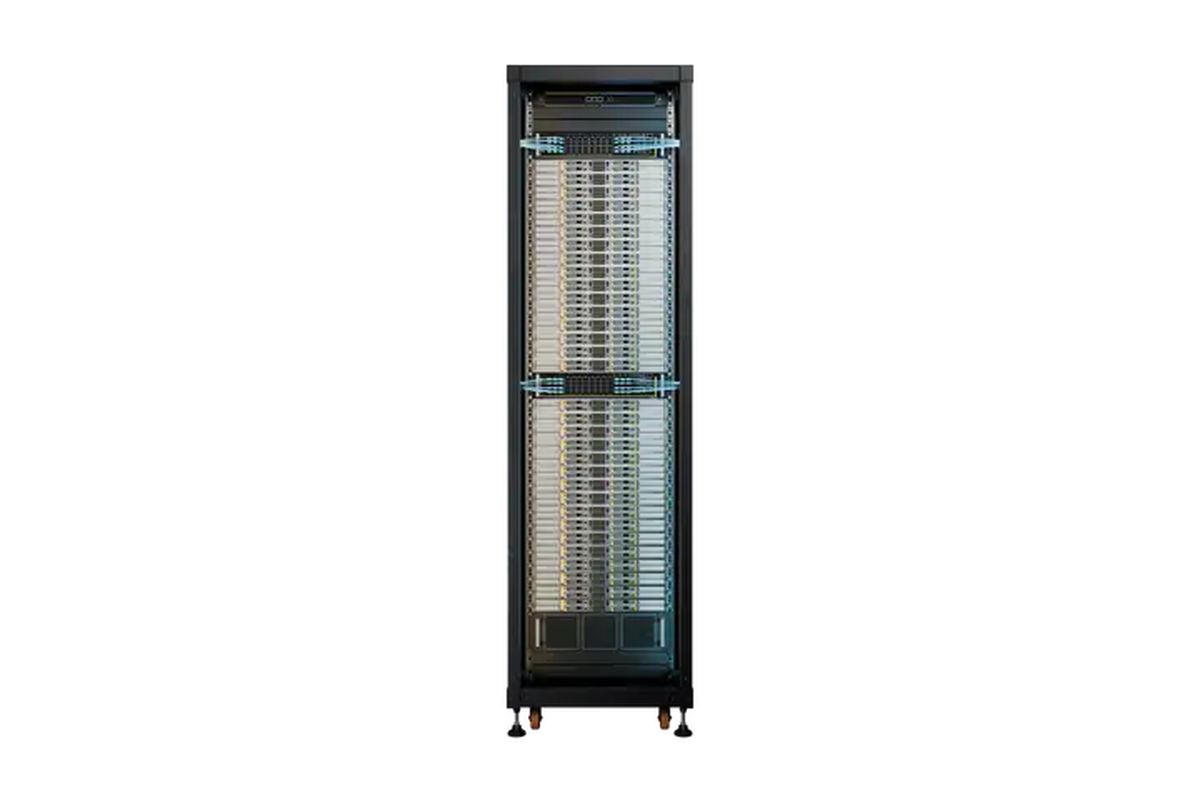
A CPU-only rack powered by 6th Gen AMD EPYC processors can support up to 32,768 CPU cores. It is designed for hyperscale customers, providing dedicated capacity for agent execution and connections to separate model inference infrastructure. An all-in-one rack combines AMD EPYC CPU nodes, AMD Instinct MI350P GPU nodes and general-purpose compute on one platform for enterprise agentic AI.
Helion configurations can be liquid- or air-cooled. AMD says customers can deploy agentic AI in existing IT infrastructure, while partners tailor CPU and GPU configurations to workloads and each deployment’s performance, power and cost requirements.
Dan McNamara, senior vice president and general manager, Compute and Enterprise AI, AMD, said agentic AI spans personal agents, enterprise applications, code execution and complex workflows, each with different compute requirements.
AMD plans to contribute the Helion specification to OCP for further development and adoption. Rack configurations are under development with ecosystem partners and are planned to be available in November 2026.