
The big fabs are rising in Gujarat and Assam. But the architecture, the IP, the startups and the research fabs that decide what India's chips actually do are being built in Bengaluru. BTS 2026's Circuit Stage laid out the road from "ESDM" to "Product Nation".
India's semiconductor map is spreading out. Wafer fabs and assembly plants are rising in Gujarat and Assam, with Tata Electronics among the builders. Yet the sessions on BTS 2026's Electro-Semicon Circuit Stage made a strong case that the decisive layer of India's chip ambitions remains in Bengaluru. That layer decides what gets designed, who owns it and which products reach the market.
The discussion began with the AI stack. In a Trends Stage fireside chat on "India's AI Stack Advantage", Navin Bishnoi of Marvell India and Dheemanth Nagaraj of Agrani Labs spoke with Maneesh Soni of GlobalFoundries. They saw openings across AI compute, networking, chip design and data-centre infrastructure, and argued that India has the talent to build its own AI compute platforms, provided it can mobilise large investments and a more mature capital market. The panel "India's Growing Impact Across AI Layers", moderated by Gokul V Subramaniam, carried the idea from chips through to applications and flagged reliable, sustainable power for AI data centres as an emerging constraint. Kalaari Capital's Vani Kola offered a useful counterweight: India does not need to win every layer of the AI stack, but should lead where it has a real advantage and build products the world will pay for.
The session "Making India ESDM to Product Nation", moderated by Pradeep Vajram with Deepak Shapeti, Arnob Roy, K Sridhar and Rajeev Naidu, then set out the broader agenda. Panellists argued that India should stop only manufacturing for global brands and start building its own products around the needs of Indian customers. They pointed to openings in power-efficient electronics, wireless connectivity, IoT and edge security. They named Make in India and the upcoming RDI initiative as supports, while patient capital and infrastructure to take prototypes to volume production remain gaps.
Products, in turn, depend on parts. The components panel, moderated by Niju Vijayan, set a goal to raise domestic value addition from 20% to 40% and an ambition to build up to 80% of semiconductor component capability at home by 2035. The EMS panel, moderated by Sonam Motwani, said contract manufacturers must become design partners, and named power electronics as a priority for deeper localisation. Prof. Marco Re, Scientific Attaché at the Consulate General of Italy in Bengaluru, explained why interconnect now matters so much. AI chips are limited by power, die size and the speed at which processors talk to each other, and advanced packaging, multi-chip integration and better PCBs are the answer. For Indian SMEs, he pointed to mature, affordable semiconductor nodes and Ultra-HDI PCBs as a realistic route to reliable products.
Geopolitics framed the timing. The "Geopolitics & Geo-Economics in ESDM" panel noted that shifting alliances and supply-chain risks are pushing global firms to diversify their sources. India's response, panellists said, should be resilient supply chains, homegrown IP and deeper specialised talent. Global partners are already arriving to take part. At the German Pavilion, Bengaluru's BizTek Accelerators signed a consultancy agreement with CheckPCB GmbH to help the German firm enter India's PCB and EMS market.
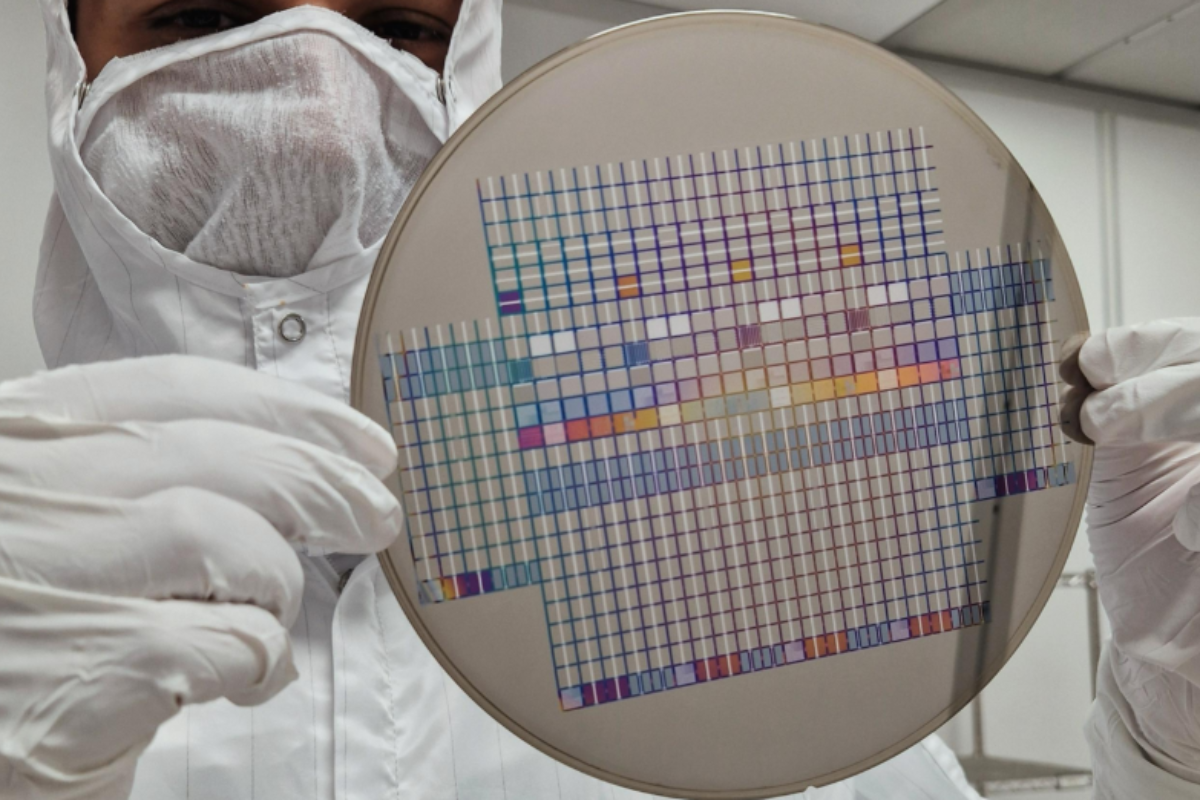
Why, then, is Bengaluru the centre of all this? Because it brings together, in one city, the ingredients a product nation needs. It has design houses and GCCs already building world-class silicon, and research fabs at IISc that can turn lab ideas into pilot wafers. It has the deepest pool of venture capital in India, and a state government acting as both investor and first customer. Fabs may be built elsewhere, but the decisions about what India's chips will do are being made here.