
Robots racing on four legs, chips designed by students in Dharwad, a national 200-mm R&D fab announced for IISc and ₹1,050 crore pledged to deep-tech startups: the 29th Bengaluru Tech Summit made clear that India's software capital is now building hardware.
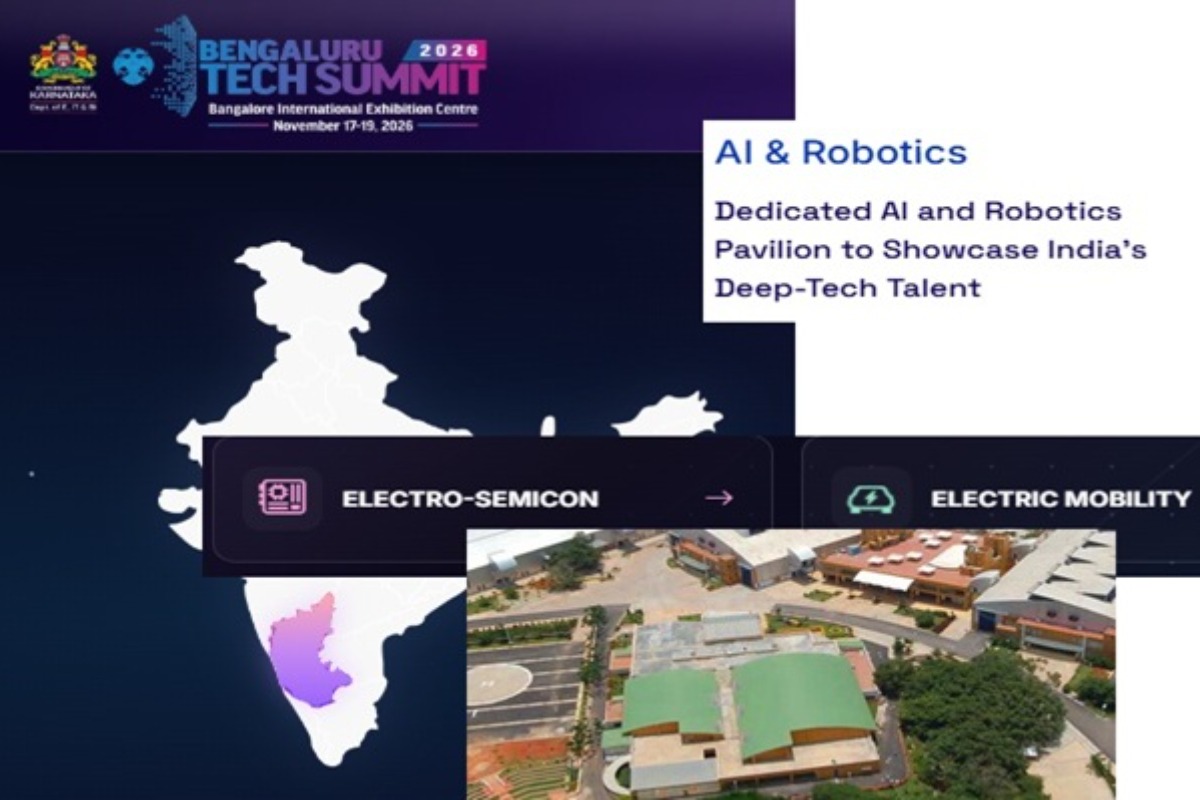
For most of its 29 editions, the Bengaluru Tech Summit was a celebration of software. In 2026, the exhibition halls at the Bangalore International Exhibition Centre told a different story. Under the theme "AI & Beyond", the most crowded booths were not showing apps or cloud dashboards. They featured edge-AI processors, automotive-grade embedded platforms, defence electronics, drones, quantum software and robots that walk. The scale matched the ambition: official closing figures recorded 70,129 attendees from 64 countries, 1,518 exhibitors and 923 startups, placing the summit among Asia's largest technology gatherings.

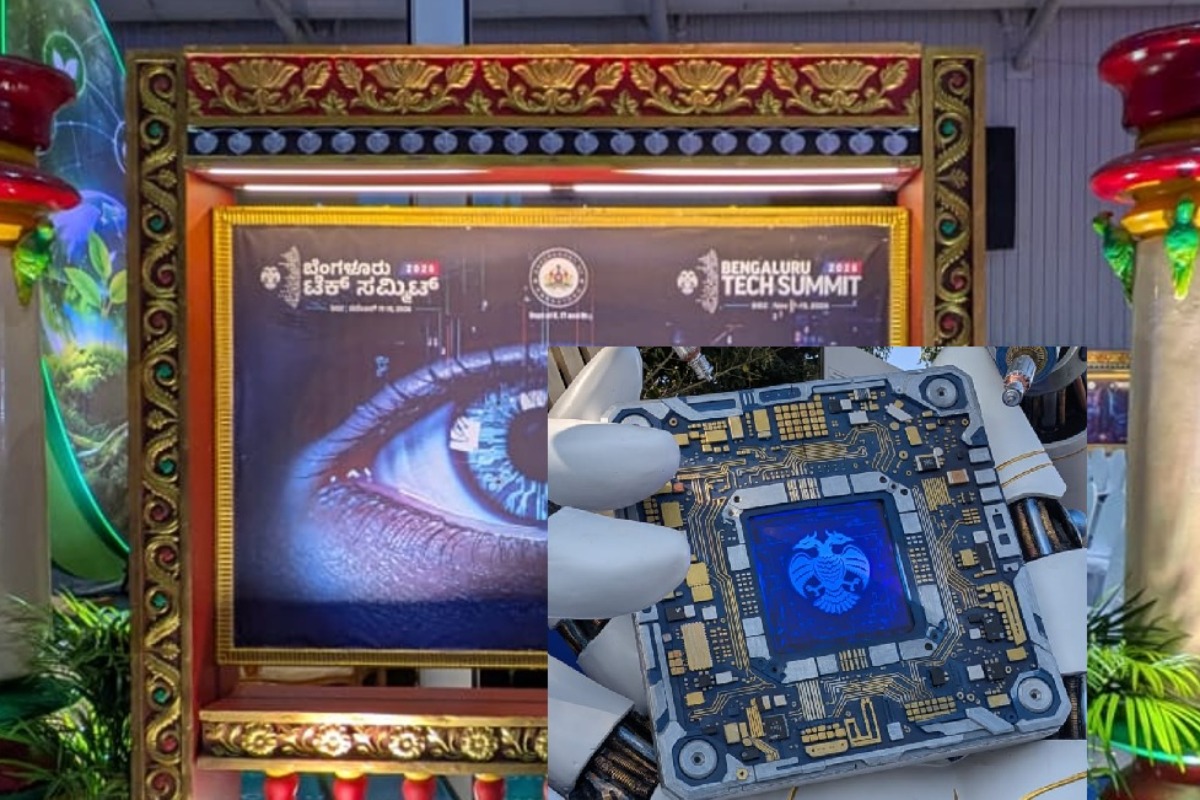
The clearest trend on the floor was Physical AI, the branch of artificial intelligence that senses and moves in the real world. Nothing captured it better than the AI & Robotics Pavilion, where three Bengaluru companies, General Autonomy, xTerra Robotics and Strider Robotics, staged what the state billed as India's first quadruped robot race. General Autonomy's Made-in-India robot Param took the honours at 4.3 metres per second. Elsewhere, Fujitsu demonstrated a robotic arm that learns by imitation and responds to plain-language commands. Mowito, Kikobot Robotics, Rotatum Mechatronics and NMotion showed the actuators, motion controllers and vision software on which such machines depend.
For visitors from the semiconductor world, the real interest lay beneath the robot shells, in the sensors, power management, firmware and chips that make real-time decisions possible. NXP Semiconductors caught that mood with the line on its booth, "Design Trusted Physical AI." Venture investor Vani Kola of Kalaari Capital observed that Indian startups are now building intelligence that moves beyond screens and into the physical world. She paired that optimism with a caution: India does not lack technological ambition, and its real challenge is turning that ambition into commercially successful companies at scale.
The embedded-systems and chip corridor was among the strongest technical zones of the show. EdgeCortix drew engineers to its SAKURA-II edge-AI co-processor, rated at 60 TOPS (INT8) within an 8–10 W power envelope. NXP, Elektrobit, BlackBerry QNX, Vector Informatik, TASKING and LDRA showed the processors, safety-certified operating systems and verification tools behind software-defined vehicles. Indian design houses, among them VSD Compute Systems, Signoff Semiconductors, Chips Star Semiconductor, Nirji Semicon and SenseSemi Technologies, represented the country's growing RISC-V and VLSI capability. Keysight, Teledyne LeCroy, Prodigy Technovations and Numato Lab showed the test and validation equipment every chip and board must pass through. The Israel Pavilion added Newphotonics, which builds 200G–3.2T photonic chips for AI data centres, and K&S Advanced Systems, which makes vibration-isolation systems for lithography and metrology.
What set the 2026 edition apart was that the state backed the showcase with lasting research infrastructure. The Government of Karnataka announced support for the 2D Innovation Hub, an IISc-led national 200-mm (8-inch) semiconductor R&D fab and pilot line. It also backed INFIfab at IISc's Centre for Nano Science and Engineering, a national facility for fabrication, packaging, MEMS, photonics, quantum and neuromorphic devices. Alongside these, BRAINZ, a nine-acre robotics and AI innovation zone being developed with ARTPARK at IISc, aims to attract ₹1,000 crore of investment over five years.
Capital followed the infrastructure. At the Future Makers Conclave on the closing day, 24 venture capital firms announced about ₹1,050 crore for deep-tech startups, up sharply from the ₹400 crore announced at the 2025 edition. These are commitments rather than funds already disbursed, but the direction is unmistakable.
Bengaluru built its global reputation by writing code for the world. BTS 2026 revealed a city that is now designing the chips, boards, robots and defence systems on which that code runs. The question for 2027 is how quickly these prototypes, pilot lines and pledges become products with customers around the world.