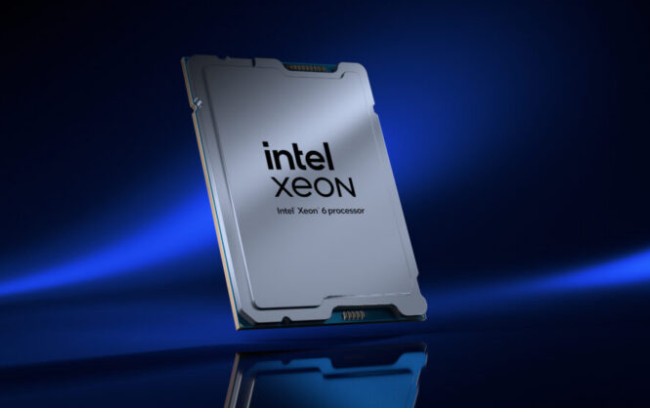
At NVIDIA GTC 2026, Intel announced that its Intel Xeon 6 processors are being used as the host CPUs in NVIDIA DGX Rubin NVL8 systems. The selection positions Xeon 6 as a key component for orchestrating, scaling, and securing GPU-accelerated AI infrastructure during the transition to large-scale, real-time inference workloads driven by agentic AI and reasoning systems.
Jeff McVeigh, corporate vice president and general manager of Data Center Strategic Programs at Intel, stated that the host CPU plays a mission-critical role in governing orchestration, memory access, model security, and throughput in GPU-accelerated systems. He noted that Intel Xeon 6 provides leadership performance, efficiency, and compatibility with the x86 software ecosystem to support scaling of inference workloads.
The host CPU influences overall cluster efficiency and total cost of ownership by managing memory, task orchestration, workload distribution, security, reliability, and operational continuity. Intel Xeon 6 supports these requirements through fast memory speeds, balanced performance across workloads, lower long-term TCO, a mature enterprise software ecosystem, robust PCIe and I/O capabilities, and high-bandwidth, low-latency connectivity.

Additional attributes cited for the selection include efficient performance per watt, optimized support across the AI software stack including new compatibility with NVIDIA Dynamo for heterogeneous inference, proven reliability in mission-critical environments, and superior orchestration of heterogeneous GPU-accelerated systems.
Intel Trust Domain Extensions (TDX) provides hardware-based isolation and attestation for end-to-end confidential computing across CPU-to-GPU data paths, adding security for AI data and models during use.
The DGX Rubin NVL8 systems build on the architectural foundation established with Intel Xeon 6776P processors in current NVIDIA Blackwell-based platforms, including DGX B300 systems. This continuity carries forward performance, experience, and system-level expertise into the new Rubin-based configurations.

Intel Xeon 6 features designed to maximize GPU utilization include Priority Core Turbo for sustained data flow to GPUs, strong single-thread performance for orchestration, scheduling, and data movement, and the ability to handle increasingly complex inference workloads efficiently.
Key specifications of Intel Xeon 6 include:
Support for up to 8 TB of system memory to accommodate large models and expanding KV caches
3X higher memory bandwidth generation-over-generation with MRDIMM technology, improving data delivery rates to GPUs
Industry-leading PCIe 5.0 lanes for AI accelerators and other devices
Confidential computing features including Encrypted Bounce Buffer for CPU–GPU data paths
Hardware-rooted isolation to safeguard AI data and models while in use
Further details are available at the Intel booth #3100 at the San Jose Convention Center during NVIDIA GTC 2026.