
Mitsubishi Electric Corporation and Chiba Institute of Technology announced they have signed a basic agreement to jointly research and develop homegrown physical AI technologies for public and private sector applications. The parties will establish a Co-Creation Center to promote the commercialization of AI robotics solutions using autonomously controlled robots, including multi-legged walking robots, humanoid robots, and drone-type robots.
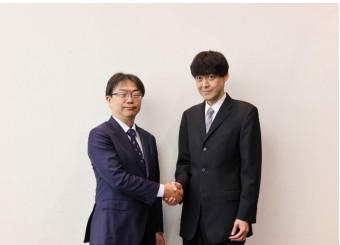
The agreement is planned to last three years, ending in April 2029.

Mitsubishi Electric contributes manufacturing knowledge across multiple sectors, maintenance and inspection expertise in infrastructure such as water environments and power systems, and motion-control and sensing technologies developed through factory automation products, including the MELFA ASSISTA collaborative robot.
Chiba Institute of Technology, through its Future Robotics Technology Center, contributes large-scale physical model technologies that enable reflexive and flexible motion responses to changing conditions. The center has experience developing robotics for real-world environments, such as mobile robots for nuclear power plants and disaster site investigation and rescue.
The collaboration will combine these technologies to advance physical AI and related systems. The partners aim to apply the resulting physical AI in infrastructure maintenance, manufacturing, disaster response, logistics, and other fields to address issues such as labor shortages and aging infrastructure.
Kunihiko Kaga, Representative Executive Officer, Executive Vice President and CTO, Mitsubishi Electric, said: “We are promoting the implementation of solutions to address a wide range of societal challenges, including labor shortages, energy issues and geopolitical risks, in collaboration with leading companies and technology partners worldwide. Through the establishment of the Co-Creation Center, we will accelerate the research and development of physical AI that endows robots with situational adaptability equal to or beyond that of humans, to tackle the challenge of realizing advanced solutions such as unmanned factories.”
Takayuki Furuta, Director of the Board of Trustees and Director of the Future Robotics Technology Center, Chiba Institute of Technology, said: “From manufacturing to security, the applications of physical AI remain limited across many real-world situations. To ensure robots evolve from ‘demo’ tool into truly useful technologies, we will leverage the strengths of both parties to vigorously advance the creation of new industries through the research and development of next-generation physical AI that surpasses human capabilities, DevOps, and the acceleration of the innovation cycle.”