
The Indian Institute of Science (IISc) has launched a “Moonshot” project on brain co-processors. The project combines neuromorphic hardware and AI algorithms to enhance or restore brain function. It is funded by the Pratiksha Trust, founded by Mr Senapathy ‘Kris’ Gopalakrishnan and Mrs Sudha Gopalakrishnan.
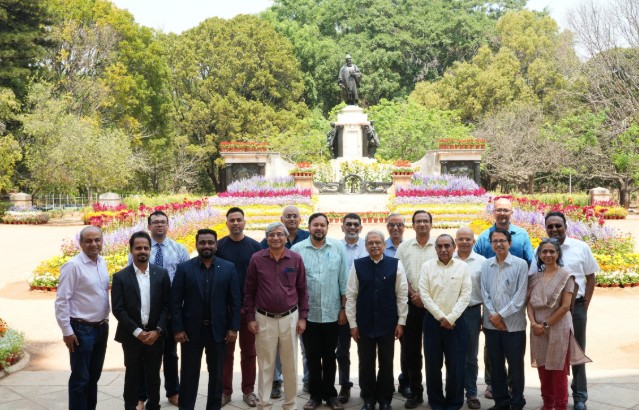
An MoU formalising the partnership was signed at IISc in the presence of Mr Kris Gopalakrishnan, Prof G Rangarajan, Director of IISc, Prof B Gurumoorthy, Chief Executive of the Foundation for Science, Innovation and Development (FSID), IISc, along with other dignitaries and deans. The moonshot project evolved from a pilot project seeded by IISc’s Brain, Computation and Data Science initiative, a cross-departmental programme involving more than 20 faculty members, which is also supported by the Pratiksha Trust.

The primary goal is to develop both implantable and non-invasive brain co-processors that decode brain activity from neural recordings, process it with an AI algorithm, and re-encode signals back into the brain via neural stimulation or neurofeedback. The co-processors will be deployed for cognitive rehabilitation of stroke survivors to restore goal-directed reach and grasp abilities. The project aims to build an AI-powered, closed-loop device that connects to different parts of the brain to restore smooth, coordinated movement.
The project seeks to indigenise the development of implants, hardware and AI stacks for low-resource settings by building India-specific databases of stereo EEG and ECoG recordings and creating digital public good through open-source AI, datasets and visualisation tools.

In the first phase, the team will develop, validate and refine a non-invasive neural co-processor that provides sensorimotor feedback for goal-directed reaching in stroke survivors, while preparing groundwork for an invasive co-processor implant. In the second phase, the goal is to develop an embedded, minimally invasive co-processor to restore sensorimotor coordination and goal-directed reaching in individuals with chronic, multi-domain deficits following middle cerebral artery (MCA) stroke.
The IISc team will work with medical professionals and researchers across the country to clinically validate and deploy the co-processors in line with national and international standards. Feedback will be incorporated from neurologists, therapists, patients and caregivers. The team will also collaborate with research institutions in India and worldwide. The project brings together IISc researchers in neuroscience, electrical engineering, bioelectronics and neuromorphic computing.
Mr Kris Gopalakrishnan stated that India is emerging as a global leader in neuroscience through collaborative international partnerships and that the project aims to provide transformative neurological treatments. Prof G Rangarajan stated that the project addresses stroke rehabilitation.