
Atoms Made to Think for Humans: The Evolution of Semiconductor Technology and the Rise of Artificial Intelligence
In the ever-advancing world of electronics, the journey from basic switching devices to sophisticated artificial intelligence (AI) systems is a testament to human ingenuity. At the heart of this evolution lies the semiconductor, a material that has revolutionized computing and enabled machines to perform tasks once thought exclusive to human intelligence. This story explores how deep sub-nanometer technologies are pushing the boundaries of semiconductor capabilities, allowing atoms to "think" for us through advanced switching devices, sensors, and computing architectures. These innovations are not only transforming electronics but also reshaping our understanding of intelligence itself.
The Foundation: Semiconductors and Transistors
Semiconductors are materials with electrical conductivity between that of conductors (like copper) and insulators (like glass). They form the backbone of modern electronics due to their ability to control electrical current. The invention of the transistor in 1947 by John Bardeen, Walter Brattain, and William Shockley at Bell Labs marked a pivotal moment in this story. Transistors replaced bulky vacuum tubes, offering a smaller, more efficient way to amplify and switch electronic signals.
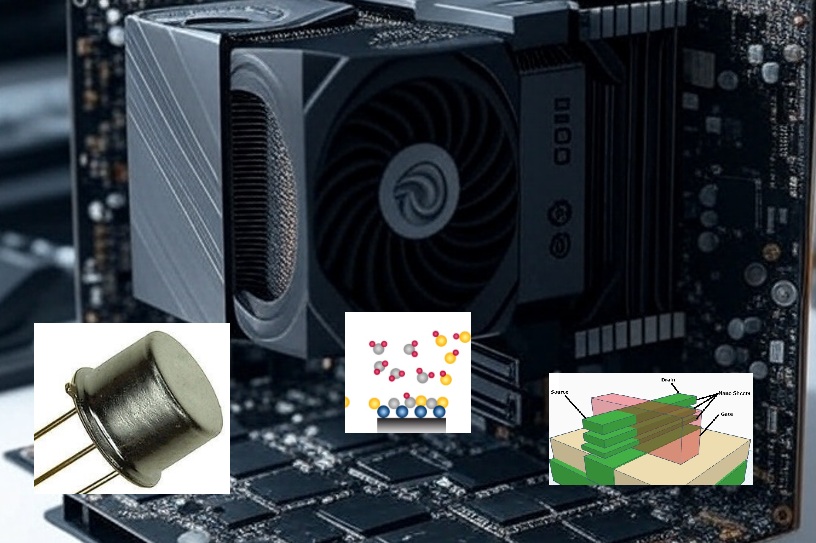
The first widely used transistor was the B...
- Deep-technical articles & analysis
- New-product comparisons
- Premium online courses
- 1 author article / year