
From Mainframes to Quantum: The Evolution of Computing Power
Computing technology has undergone a remarkable transformation over the past eight decades, evolving from massive, room-sized machines to the cutting-edge quantum systems of today. What began as a tool for wartime calculations has become an indispensable part of modern life, driving innovation in science, industry, and everyday convenience. This article traces the key milestones in the history of computing, highlighting the technological leaps that have shaped our world and offering a glimpse into what the future might hold.
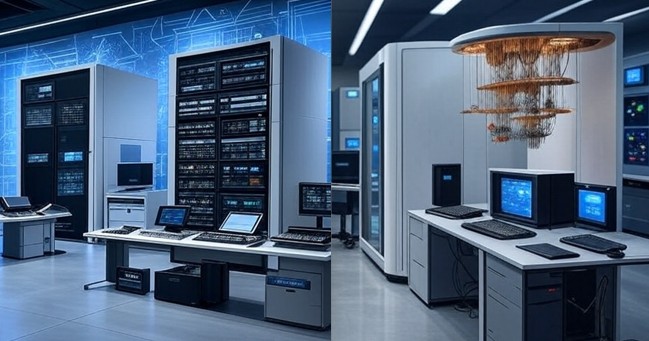
The Dawn of Electronic Computing (1940s–1950s)
The story of modern computing begins in the 1940s with machines like the Harvard Mark I (1943–1944), IBM’s first large-scale system. This electromechanical giant, used for military calculations during World War II, could perform addition in 0.3 seconds and multiplication in 6 seconds—a marvel at the time, though slow by today’s standards. The 1950s introduced mainframes, such as the IBM 701 (1952), which relied on vacuum tubes and magnetic tape storage to achieve 16,000 additions per second. These early systems were expensive and accessible only to governments and large organizations, but they marked the birth of electronic computing.
Transistors ...
- Deep-technical articles & analysis
- New-product comparisons
- Premium online courses
- 1 author article / year