
On June 19, 2025, a pan-European consortium announced the GENESIS project in Brussels, Belgium, aimed at developing sustainable processes and technologies for the semiconductor industry. Coordinated by CEA-Leti, the three-year initiative involves 58 partners, including large enterprises, SMEs, research institutes, universities, and industry associations, covering the entire European semiconductor value chain. The project focuses on emission control, eco-friendly materials, waste minimization, and raw material reuse, aligning with the European Green Deal and European Chips Act.
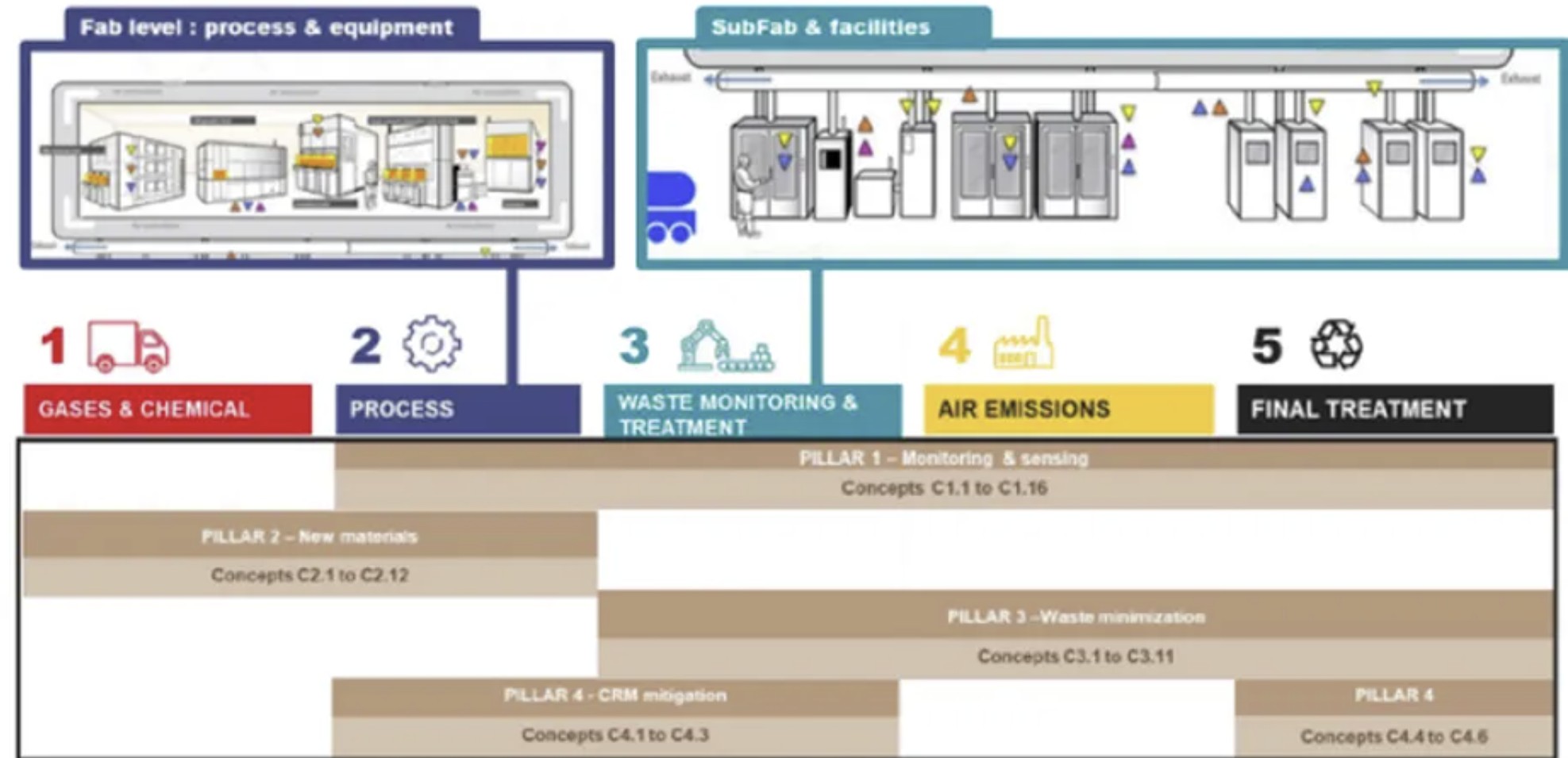
The GENESIS project, with a budget of nearly €55 million, is co-funded by the European Commission, EU member states, and the Swiss State Secretariat for Education, Research and Innovation through the Chips Joint Undertaking (Chips JU). It targets approximately 45 sustainability innovations across four strategic pillars: real-time emissions tracking and process feedback systems; PFAS-free chemistries and low-global-warming-potential alternatives; recycling and reuse of solvents, gases, and slurries; and strategies to reduce dependency on critical raw materials.
The project addresses five stages of the semiconductor manufacturing lifecycle: materials (PFAS-free alternatives, gases, and chemicals), processes, waste monitoring and treatments, air emissions, and final treatments. It aims to deploy sensor-integrated abatement systems to reduce PFAS and greenhouse gas emissions while promoting knowledge sharing, job creation, and socioeconomic benefits across European regions.
SEMI Europe will manage communication and promotion to increase awareness of sustainable semiconductor manufacturing technologies in industry and academia. The initiative seeks to align supply-chain practices with environmental regulations and position Europe as a leader in green semiconductor innovation amid rising chip demand and growing environmental concerns.