
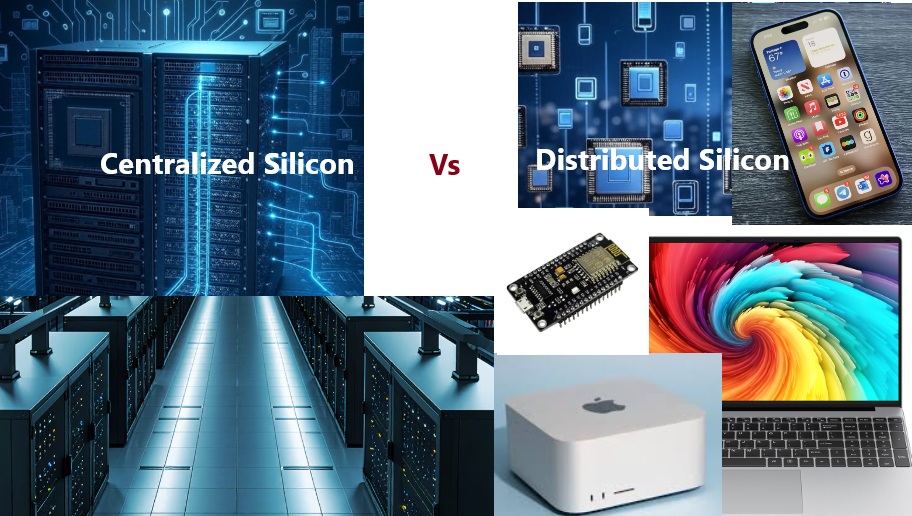
Semiconductor market forces: Centralized vs. distributed silicon in the age of AI computing
As the world is navigating rapid technological change powered by semiconductors, A highly debatable topic emerged within the semiconductor industry: Should computing power be concentrated in massive data centers or spread across billions of personal devices and edge IoT systems? This question wasn’t just about technology it carried profound implications for markets, geopolitics, societal equity, security, privacy, costs, and industry growth. Drawing from industry reports, academic research, and expert analyses, this story explores the stakes of centralized versus distributed silicon systems.
The Market: Titans and Innovators
The semiconductor market, valued at over $600 billion in 2025, was a dynamic arena. Centralized silicon powered data centers, the engines of cloud computing, artificial intelligence (AI), and big data. A 2024 McKinsey & Company report noted that data center demand had grown by 25% annually since 2020, driven by AI and cloud adoption. Companies like Intel, NVIDIA, and TSMC dominated this space, leveraging their resources to produce advanced chips a capital-intensive process that limited competition.
Meanwhile, distributed silicon fueled a diverse ecosystem of personal devices and edge computing. Players like Apple, Qualcomm, and numerous st...
- Deep-technical articles & analysis
- New-product comparisons
- Premium online courses
- 1 author article / year