
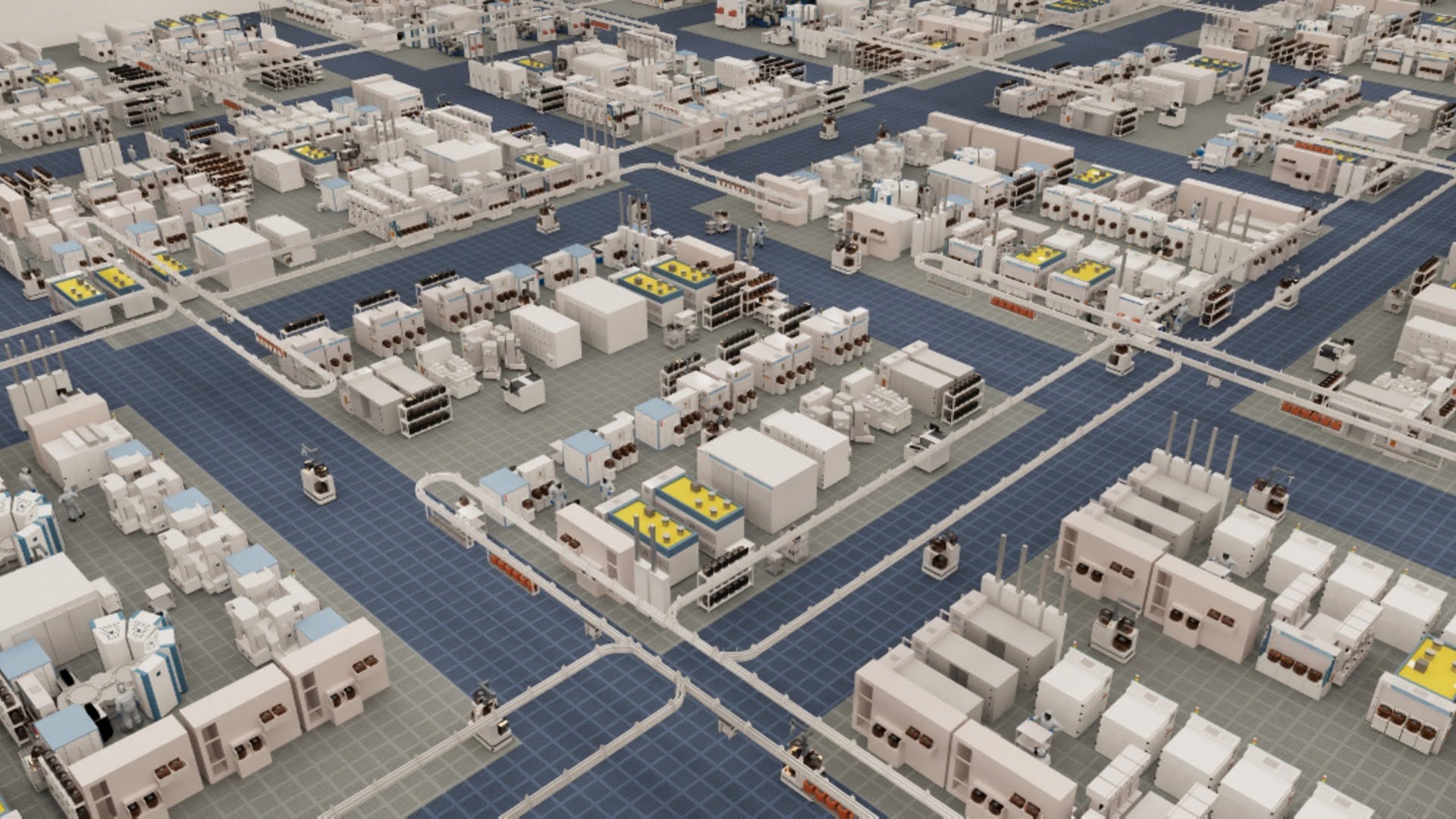
NVIDIA has described an AI-defined fab, a semiconductor manufacturing factory using accelerated simulation, physics-based AI, AI agents and digital twins to help engineers optimize processes and make decisions faster.
NVIDIA says demand for advanced chips is rising as manufacturing processes become more complex and the margin for error shrinks. Engineering analyses of process changes, materials and defects can take days, while physical experiments on a fab line are slow and expensive.

Accelerated computing can let engineers evaluate more alternatives before physical trials. Using the NVIDIA cuDSS library, COMSOL is accelerating multiphysics simulations for semiconductor manufacturing by up to 10x. Applied Materials' Ginestra simulation platform runs up to 10x faster than CPU-only approaches with cuDSS, while its ACE+ multiphysics platform delivers topography simulations up to 35x faster with NVIDIA PhysicsNeMo. Siemens is integrating NVIDIA cuLitho into its Calibre lithography software, providing up to 17x acceleration on key simulation workloads. Computational lithography defines how circuit patterns are printed onto silicon.
Physics-based AI can also predict how materials and processes will behave without running a full simulation each time. Lam Research demonstrated that NVIDIA PhysicsNeMo can predict plasma behavior in milliseconds, compared with days for a full simulation. Plasma is the electrically charged gas used in semiconductor etch processes. Applied Materials uses digital twins built with NVIDIA Omniverse libraries to simulate fab-level optimizations in layout, throughput, cost and process control.
AI agents can automate sequences of engineering tasks. Advantest is using NVIDIA NeMo Switchyard AI agents to automate the selection of an AI model for a given task, reducing response times from hours to minutes. Applied Materials also uses NVIDIA Omniverse libraries to build physically accurate digital twins of entire fabs, where teams can simulate material movement, identify bottlenecks and evaluate layouts and operating strategies.
NVIDIA describes the AI-defined fab as a connected process in which production data informs models, models evaluate changes, and findings return to engineers making production decisions.