
Taiwan King Lung Chin PTC Co., Ltd. (KLC Corporation) has highlighted its Thermal Test Vehicle (TTV) solutions for chip-wafer layout design and AI/HPC thermal validation, alongside high-voltage coolant heaters for electric vehicles (EVs). Depending on the series, the heaters have voltage ratings from 12 to 400 VDC and power outputs of up to 12,000 W.
KLC says increasing power densities in AI infrastructure and high-performance computing systems are making thermal validation more critical in chip-wafer layout design, planning, design verification and cooling system development.
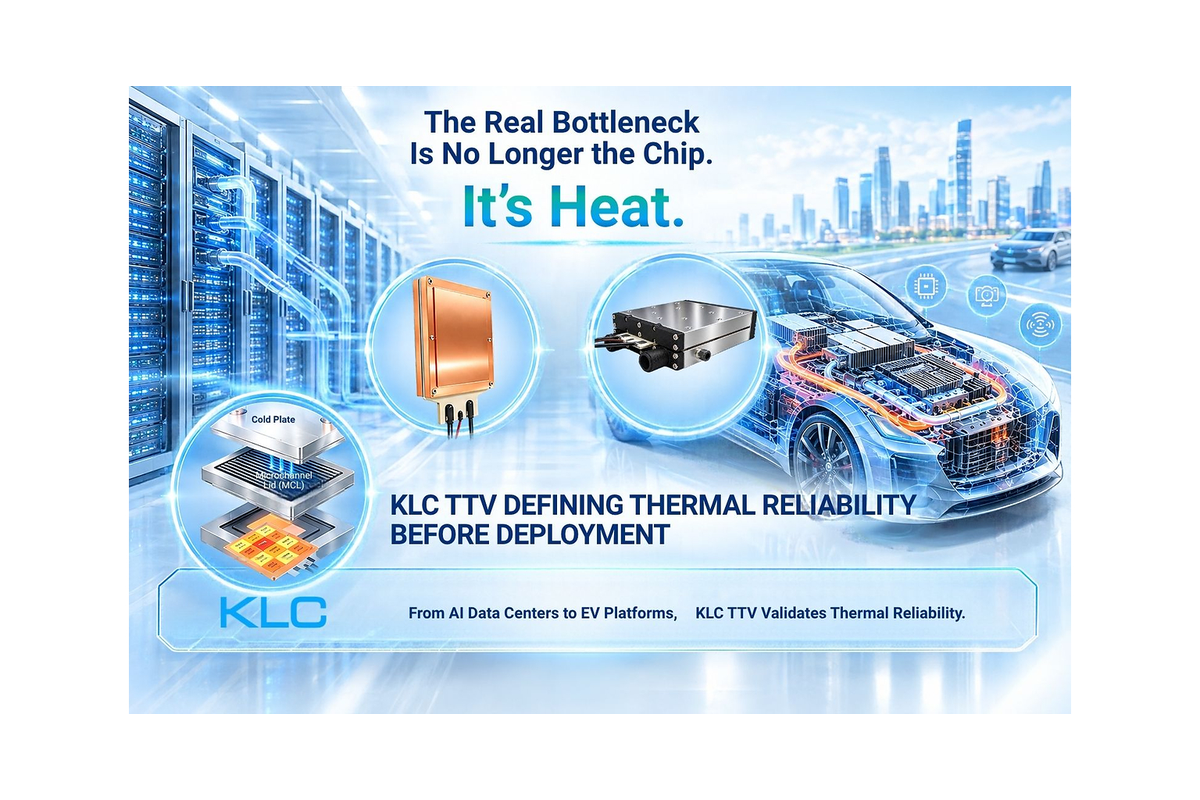
The TTV solutions provide controllable heat sources to simulate thermal loads in high-power electronic devices and advanced semiconductor architectures. They are designed to support early-stage chip-wafer layout and architecture design verification and evaluation of cooling performance in cold plates and liquid cooling systems. Applications include AI servers, GPU platforms, advanced packaging and semiconductor wafer devices.
Joanna Wu, CEO of KLC Corporation, said: "From Chip-Wafer layout design planning and AI/HPC cooling validation to electric vehicle heating, thermal management is essential to next-generation semiconductor and automotive systems. KLC combines thermal testing capabilities and heating technologies to support customers developing increasingly demanding applications."
KLC's TTV solutions are described on the company's website at https://www.ptc-heater.com.tw/thermal-test-vehicle-ttv/.