
Panasonic Holdings Corporation has announced that Nessum, its communication technology for energy management and infrastructure applications, has been approved as the international standard IEEE 1901-2026. The approval was granted by the Board of Directors of the IEEE Standards Association (IEEE SA).
Panasonic said the need for efficient networking and control of large numbers of devices is increasing in smart grid and building automation applications. The company linked this demand to decarbonization initiatives, advances in energy infrastructure and rising electricity consumption from data centers associated with expanding AI demand.

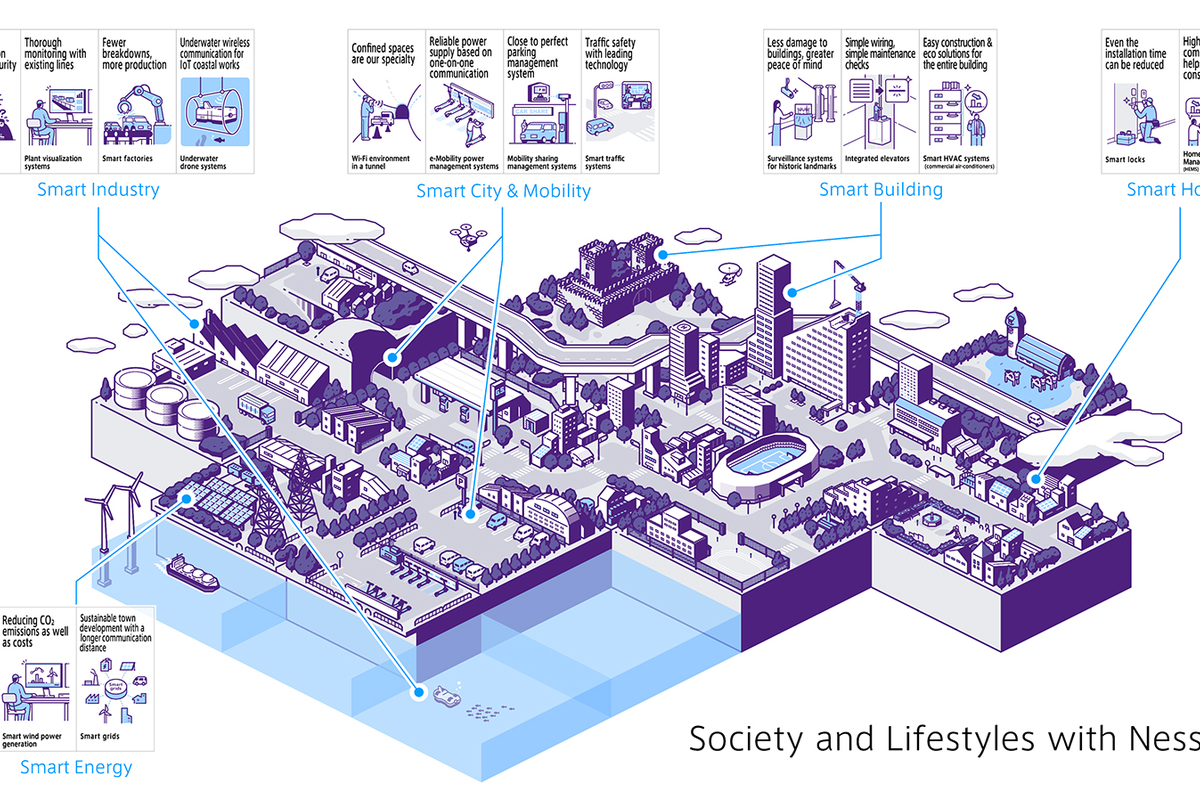
Nessum can operate over a variety of communication media, including existing power lines, control lines, coaxial cables and twisted-pair cables, as well as wireless and underwater media. IEEE 1901-2026 integrates IEEE 1901-2020, IEEE 1901b-2021 and IEEE 1901c-2024, incorporating knowledge from market deployments and operational experience. The standard combines high-speed and long-distance communication, reliability and security, and adaptability to different communication media.

Panasonic said Nessum has been adopted in products including commercial HVAC systems and smart grid equipment, and that cumulative shipments of LSI devices incorporating Nessum semiconductor IP cores have exceeded six million units. Applications also include building automation systems, surveillance cameras and industrial devices. Nessum has been adopted as a wiring harness for robots and construction machinery, where it delivers power and communications over a single cable to reduce wiring complexity.
Panasonic Holdings plans to continue participating in IEEE standardization activities, licensing semiconductor IP cores compliant with international standards and working with Nessum Alliance members to expand adoption. The company said it will also support the digitalization and advancement of social infrastructure, including smart grids and building automation systems.