

The Energy and Resources Institute (TERI) released an agrivoltaics report for Indian conditions at the 7th Agrivoltaics World Conference in New Delhi. The report, Advancing Agrivoltaics in India: Evidence based Best Practices, and Policy Recommendations for the Energy-Food-Water Nexus, examines PV technologies, mounting structures and system layouts for India’s agro-climatic conditions, crop systems and small landholdings.
A TERI study cited at the conference’s inaugural session estimates that about 47.5 million hectares, or roughly 30 per cent of India’s 160 million hectares of cropland, are technically suitable for agrivoltaics. A deployment scenario covering 16 million hectares estimates annual electricity generation of 12,775 TWh, comparable to or higher than India’s projected demand of 5,250–10,020 TWh by 2050. The release notes that these are technical estimates and actual deployment will depend on local conditions and feasibility.

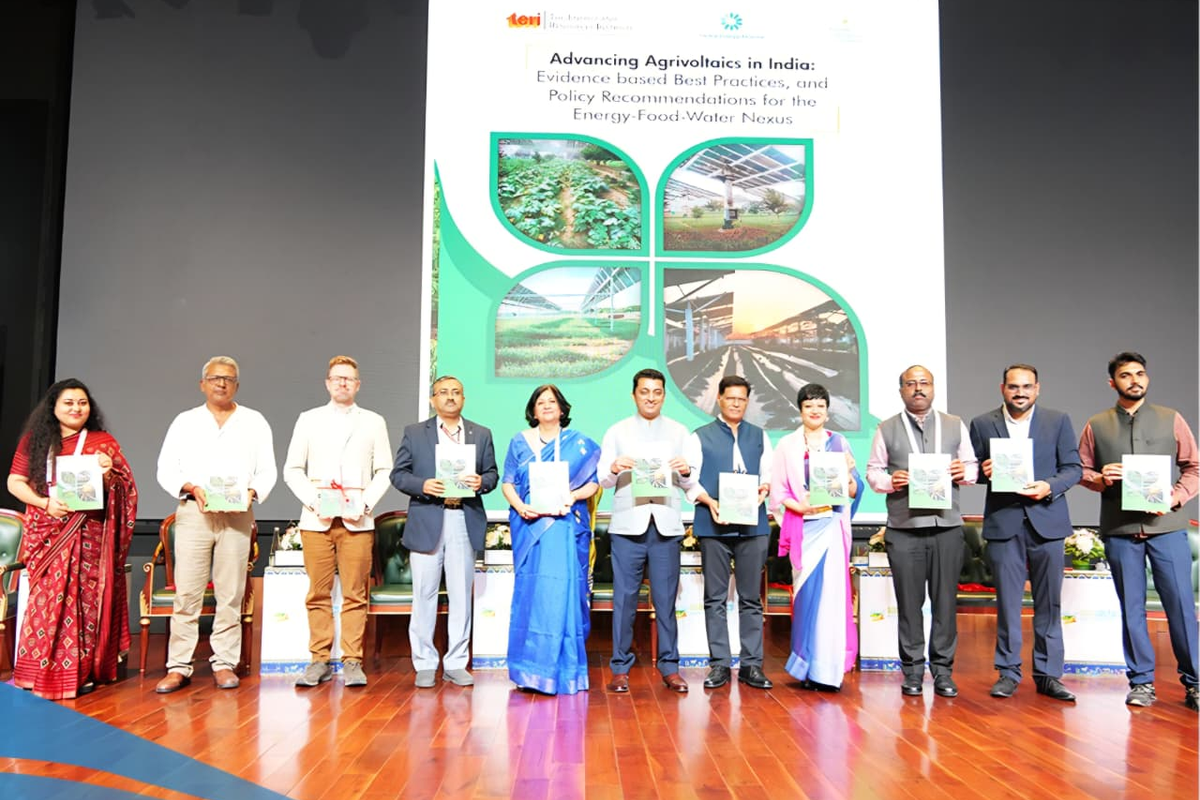
The conference, hosted by the Ministry of New and Renewable Energy with support from the Indo-German Cooperation on Agrivoltaics project, ran from 21 to 23 October 2026. TERI led the technical session “Technology and Design Choices for Indian Conditions” on the conference’s concluding day. TERI Director General Dr Vibha Dhawan said, “Agriculture and energy must go hand in hand. For India to achieve its development aspirations, it is essential to become self-sufficient in energy.”

Session priorities included integrating agricultural and engineering knowledge into professional training, developing standards for operations, maintenance and safety across agro-climatic zones, and strengthening collaboration among industry, academic institutions and research organisations. The discussion also addressed workforce preparation for system design, installation and long-term operation.


