
indie Semiconductor has announced that superluminescent light-emitting diodes (SLEDs) from its photonics portfolio have completed final space qualification testing and been selected for the Copernicus Hyperspectral Imaging Mission for the Environment (CHIME). The selection builds on indie Photonics existing work in space programs, where optical component qualification requirements are among the most stringent of any industry, and supports the company's strategy of expanding into high-reliability markets beyond automotive.
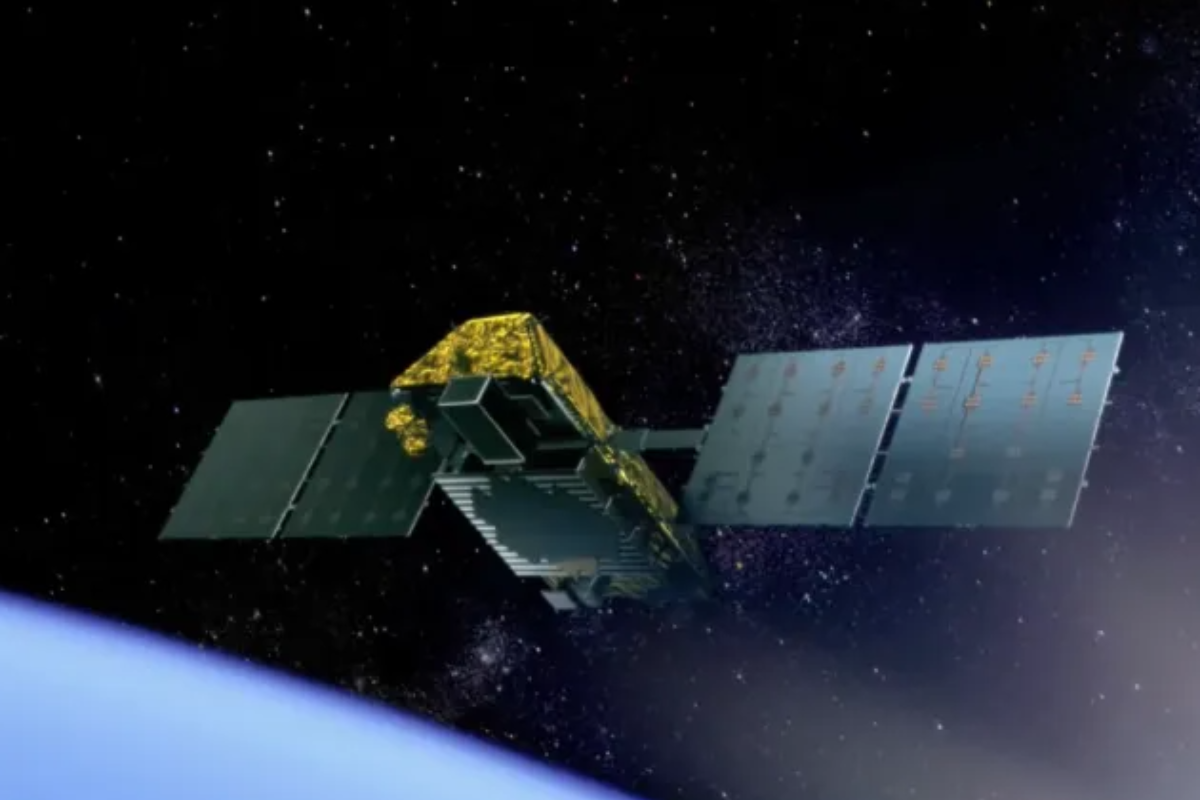
CHIME is a major expansion of Copernicus, Europe's flagship Earth observation program, and will use advanced hyperspectral imaging, which captures light across many narrow wavelength bands, to monitor the Earth in unprecedented detail.
indie's broadband SLEDs, operating at a wavelength of 1550nm, will serve as highly stable onboard optical reference sources used to calibrate the mission's hyperspectral imaging instrument throughout its operational life. Keeping that calibration stable is critical to the long-term accuracy and consistency of the environmental data collected from orbit.
The selected SLED platform combines high optical power, broad spectral output, and exceptional long-term stability, making it well suited to precision sensing and instrumentation in demanding environments. Beyond Earth observation, indie's 1550nm broadband SLEDs are widely used as light sources in fiber optic gyroscopes (FOGs), which provide highly accurate navigation, guidance, and stabilization in aerospace and defense systems. FOG-based solutions are used across unmanned aerial vehicles, commercial and military aircraft, helicopters, drones, autonomous platforms, and space systems, building on indie Photonics' growing heritage in space-qualified optical technology.
Philipp Vorreau, VP and general manager of indie's SLEDs Photonics Division, said being selected for CHIME is a proud moment for the photonics team and a strong endorsement of its SLED technology. He said space missions demand exceptional performance and reliability with little margin for error, and that the selection reflects years of engineering excellence and validates the company's ability to deliver high-performance optical components for some of the world's most demanding applications. He added that indie sees significant opportunities to expand its presence in space and other high-reliability markets where photonic performance and quality are mission-critical.
The SLEDs will be deployed aboard multiple CHIME satellites, currently it is scheduled for launch in 2028 and 2030.