
Innatera selected Synopsys, in Sunnyvale, California, for the design and validation of its next-generation neuromorphic microcontrollers. The collaboration uses Synopsys solutions for electrostatic discharge (ESD) and power integrity analysis to support scaling operations for edge processing applications in industrial sensors, robotics, wearables, and smart home technologies.
Innatera develops neuromorphic microcontrollers based on Spiking Neural Networks (SNNs) that process information in an event-driven manner, mimicking biological neuron communication for real-time, ultra-low-power operation in sensor-rich environments. The architecture incorporates mixed-signal analog computation, dense interconnects, and low-voltage design, which can introduce electrical noise and ESD sensitivity.
Innatera employs Synopsys PathFinder-SC signoff solution for ESD simulation at scale, identifying vulnerabilities and root causes prior to manufacturing, and providing early high-fidelity modeling of analog behavior under various conditions.

The Synopsys Totem power integrity platform conducts transistor-level analysis to ensure reliable power delivery and performance optimization for ultra-low-power AI processors, modeling typical operating conditions and addressing noise coupling.
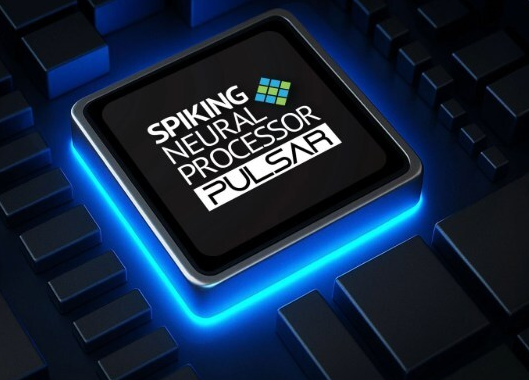
These tools were used to validate the design of Pulsar, described as the world's first commercial neuromorphic microcontroller. Pulsar combines a flexible computing architecture with SNNs, enabling event-based reactions to sensor changes for up to 100x lower latency and 500x lower energy consumption compared to conventional AI processors, supporting "always-on" devices such as wearables and smart sensors.

Aditya Dalakoti, director of SoC and mixed-signal at Innatera, stated that Synopsys technology and support enable scaling into real-world adaptive applications with enhanced speed, usability, and versatility.
Prith Banerjee, senior vice president at Ansys, part of Synopsys, noted that the collaboration accelerates product development for embedded AI in edge computing.