
Lam Research announces industry's first Molybdenum deposition tool ALTUS Halo for high-volume chip production overcoming limitations of metals such as Tungsten which has replaced Copper to enable chip scaling for advanced AI chip and 3D NAND chip fabrication.
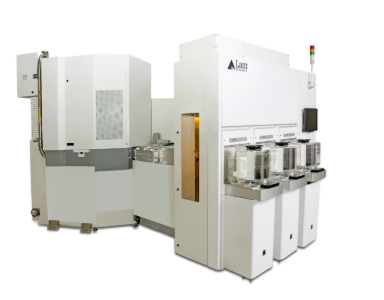
ALTUS Halo deliver feature fill and high-precision deposition of low resistivity, void-free molybdenum metallization for making chips in deep nodes of lesser than 2nm where copper and other metals failing as interconnect metal. Lam is presently qualifying and ramping with all leading chipmakers. The ALTUS Halo tool series is optimized for a range of metallization needs, with the ability to deposit conformally or selectively with bottom-up feature fill using chemistry and thermal flexibility, as well as plasma for temperature-sensitive applications. This tool joins Lam's Akara, the most advanced conductor etcher recently announced by Lam Research.

"Building on Lam's deep metallization expertise, ALTUS Halo is the most significant breakthrough in atomic layer deposition in over 20 years," said Sesha Varadarajan, senior vice president and general manager of the Global Products Group at Lam Research. "It brings together Lam's quad station module architecture and new advancements in ALD technology to provide engineered, low-resistivity molybdenum deposition for high-volume manufacturing — a critical requirement for emerging and future chip inflections, including 1,000-layer 3D NAND, 4F2 DRAM and advanced gate-all-around logic."
Molybdenum Enables Low-Resistance Metallization Required for Next-Generation Chips
For semiconductors to operate, fast electrical signals travel through connections, such as 3D NAND wordlines, to send commands. Nanoscale features are etched and, when copper cannot be used, they are traditionally filled with tungsten to create the essential connections. The lower the metal resistivity, the faster the signal speeds. Additionally, in conventional tungsten-based wiring, extra barrier layers are added to prevent unwanted electrical interactions. As NAND, DRAM and logic scale to more complex architectures including 3D integration, electrical signals must travel through more restrictive connections. This increases the potential for bottlenecks and slower speeds, and the possibility of electrical shorts in some instances.
Molybdenum is an ideal metal for these and future applications because it has lower resistivity in nano-scale wires than tungsten and doesn't need an adhesion or barrier layer, thereby reducing the number of process steps, boosting efficiency and helping improve chip speed. Building on decades of expertise in metallization and advanced development, and through new innovations in deposition technology, Lam has made the ALD of molybdenum viable for mass production for the first time. In most instances ALTUS Halo provides better than 50% improvement in resistance over conventional tungsten metallization.
Early adoption has begun at leading high-volume 3D NAND manufacturers with fabs in Korea and Singapore and in advanced logic fabs, while development continues with DRAM customers.
"The integration of molybdenum metallization enables Micron to be first to market with industry-leading I/O bandwidth and storage capacity in the latest generation of NAND products," said Mark Kiehlbauch, corporate vice president of NAND development at Micron. "Lam's ALTUS Halo tool has made it possible for Micron to bring molybdenum into mass production."