

Different structures used in Tunnel Field-Effect Transistors (TFETs)
Sign in to read and print this article.
Introduction
TFETs leverage quantum tunneling to achieve ultra-low subthreshold slopes, making them highly efficient for low-power applications. By using a tunneling mechanism rather than thermionic emission, TFETs can operate at lower voltages, significantly reducing power consumption. This makes TFETs particularly advantageous for future low-power, high-performance computing applications.
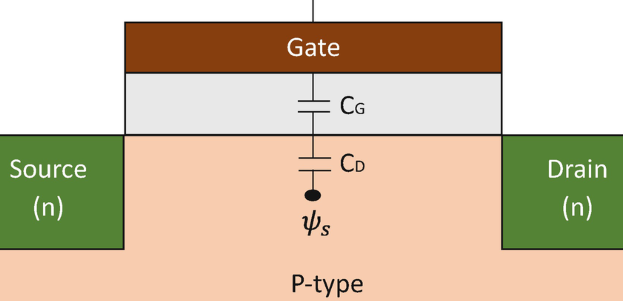
Using the same substrate material throughout can make it resemble a conventional n-i-n (n-type, intrinsic, n-type) TFET, This consistency simplifies fabrication and maintains high electron mobility and efficient tunneling properties. The uniform material also ensures compatibility and enhances performance, especially for biosensing applications. This artical mainly concentrate about different base TFET structures with their material selection and doping concentration properties.
Different base TFET structures
N-I-N (N-type, Intrinsic, N-type) Structure
Structure: Consists of an n-type source, an intrinsic region, and an n-type drain.
Operation: The gate voltage controls the tunneling of electrons from the source to the drain through the intrinsic region.
Advantag...
You've read this far — sign in to keep reading