

From Parabolic Dishes to Flat Phased Arrays: The Transformation of Satellite Broadband Antennas
The quest for global, high-speed internet access in the areas where no-cellular connectivity in feasible has driven remarkable advancements in satellite antenna technology. From bulky parabolic dishes suited to stationary geostationary (GEO) satellites to sleek, flat-panel phased arrays enabling connectivity with fast-moving low-Earth orbit (LEO) constellations, antennas have evolved to meet demands for mobility, lower latency, and affordability in personal, business, an enterprise data communication.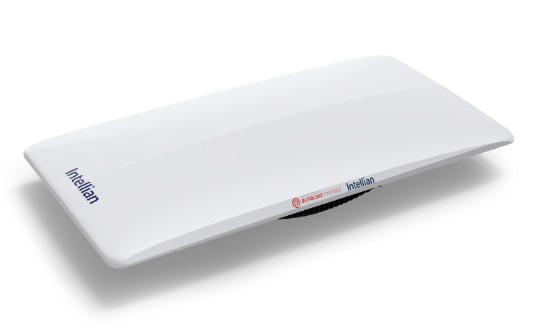
Pic: Phase Array Antenna (Source: Intellian)
Early Era: Parabolic Dishes for GEO Satellites
Satellite communication for consumers began in the 1980s and 1990s with very-small-aperture terminals (VSATs) using parabolic reflector antennas. These curved dishes focus radio waves onto a feedhorn, providing high gain for links to GEO satellites at ~36,000 km altitude.
Traditional providers like HughesNet and Viasat relied on 0.74–1.2 meter parabolic dishes operating in Ku- and Ka-bands. These delivered broadband to rural areas, with speeds evolving from a few Mbps to 50–150 Mbps by the 2020s via high-throughput satellites (HTS) like Viasat-3 and Hughes' Jupiter-3.
Parabolic designs remain dominant for GEO services d...