

Surgery-Free Brain Implants: MIT Researchers Demonstrate Autonomous Wireless Nanoelectronics That Cross Blood-Brain Barrier
MIT researchers have developed microscopic wireless electronic chips that can be injected into the arm, travel through body fluids, cross the intact blood-brain barrier, autonomously locate a target brain region, self-implant, and deliver precise electrical stimulation without any surgery.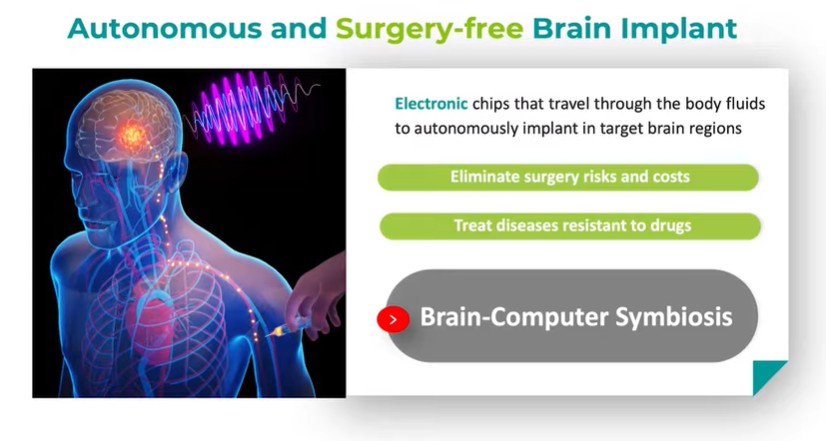
The technology, detailed in a study published today in Nature Biotechnology, combines subcellular-sized nanoelectronic devices with living biological cells to form cell-electronic hybrids. These hybrids are introduced via simple injection, evade immune attack, recognize diseased areas through biochemical sensing, and provide targeted neuromodulation with 30-micrometer precision.
In mouse studies, the devices described as a billion times smaller than a grain of rice — have been wirelessly powered and shown to operate deep inside the brain. The approach eliminates the need for skull openings, catheters, or external guidance systems required by existing brain implants such as Neuralink.
Key technical advances include wafer-scale fabrication of free-floating wireless chips with high power-conversion efficiency, fusion of electronics with living cells, intact blood-brain bar...