

SRAM: Market and tech trends in AI semiconductor world
This 8 page Article provide the basic tech, advanced trends and ample market research and analysis information on this key component of semiconductors in this AI driven world.
Static Random-Access Memory (SRAM) has been a cornerstone of high-performance computing for over six decades, valued for its speed, reliability, and low-latency data access. Despite challenges in scaling and competition from emerging memory technologies, SRAM remains integral to applications ranging from cache memory in processors to embedded systems in automotive and aerospace industries. This report provides a comprehensive analysis of SRAM's market dynamics, technological advancements, current trends, future forecasts, and its evolving role in the semiconductor landscape.
Understanding SRAM: Technology and Fundamentals
What is SRAM?
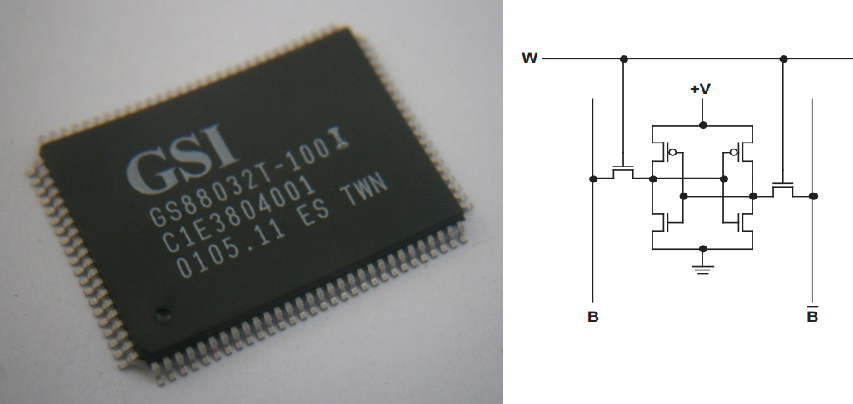
SRAM is a type of volatile semiconductor memory that stores data using a bi-stable latching circuitry, commonly a flip-flop, requiring no periodic refresh like Dynamic RAM (DRAM). Each SRAM cell typically consists of six transistors (6T configuration), with four forming the flip-flop to store a bit and two controlling access to the cell. This design ensures fast access times and data stability as long as power is supplied, but it also m...
- Deep-technical articles & analysis
- New-product comparisons
- Premium online courses
- 1 author article / year