

The Material Edge: Why Materials Are the Next Battleground for India's Semiconductor Ambitions
Chips get the headlines; materials decide whether they can be made. From 2D-material research fabs and ultra-pure gases to lithium supply chains and magnet-free motors, BTS 2026 showed that materials are moving to the centre of India's electronics strategy.
Every semiconductor roadmap rests on materials: wafers, specialty gases and chemicals, photoresists, substrates, solders, battery minerals and the advanced films that make next-generation devices possible. India's design talent is world-class, but its materials base remains thin and largely dependent on imports. At BTS 2026, a string of sessions and announcements showed that this gap is finally on the national agenda.
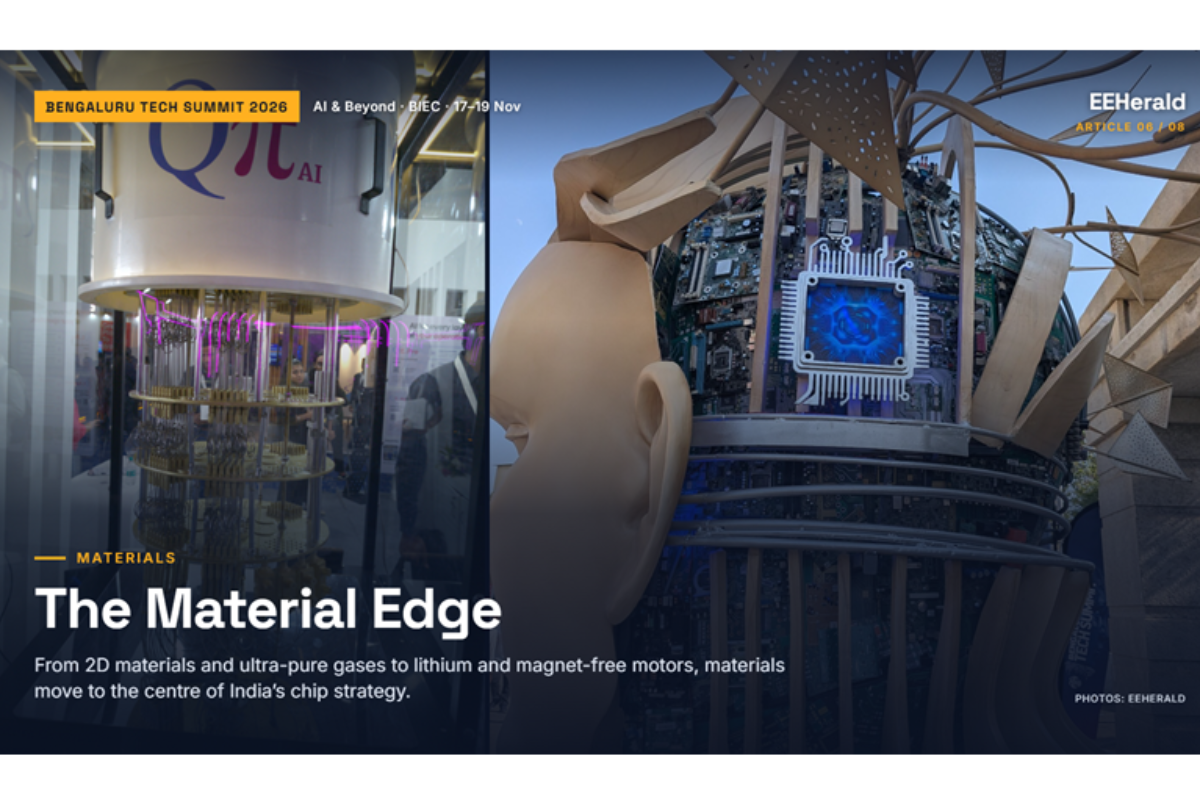
The Day 2 panel "The Material Edge: Engineering Atoms for Energy, Compute and Space" was devoted entirely to the subject. Moderated by Swapna Gupta, it brought together Siddharth Jena, Kajal Shah, Hareesh Chandrasekar, Murari Ramkumar and Gadhadar Reddy, whose work spans semiconductors, propulsion and energy materials. Their shared concern was the difficult journey from laboratory breakthrough to industrial manufacturing, the "valley of death" in which many materials startups stall.
The state's own headline semiconductor announcement is, at heart, a materials bet. Its support for...