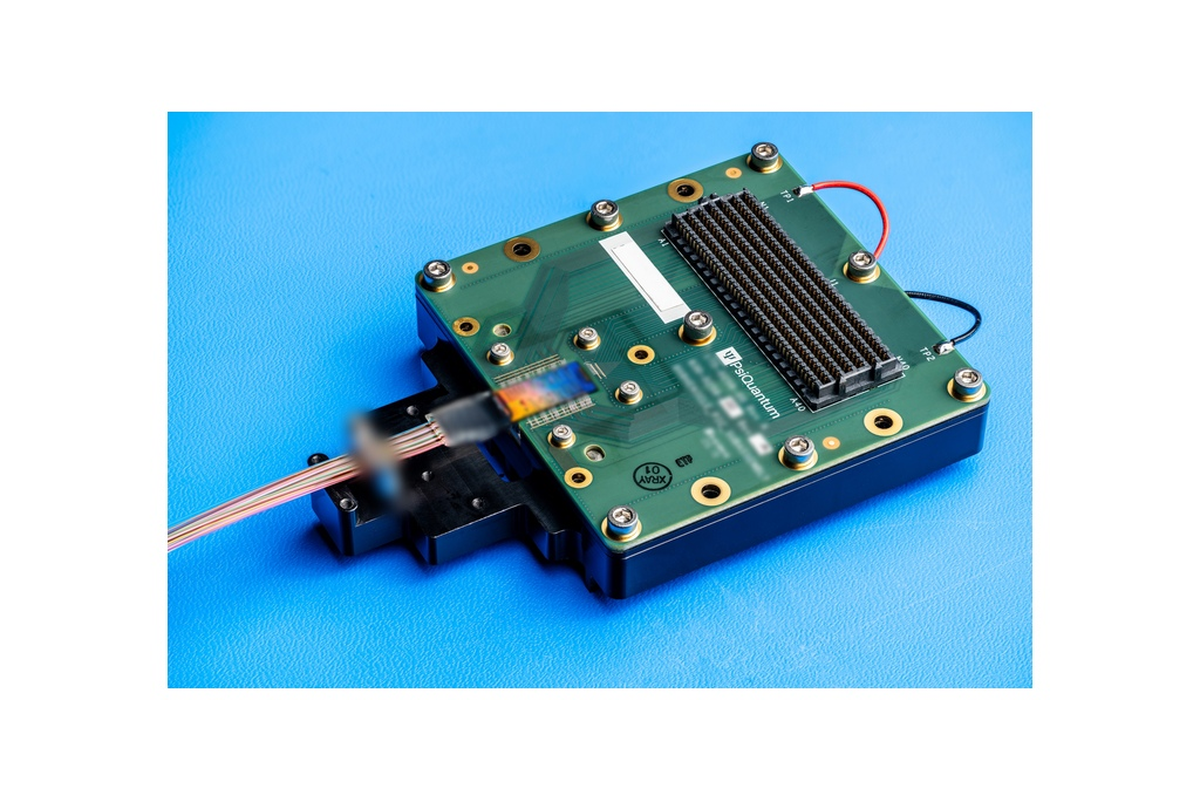

IQM Quantum Computers has demonstrated entanglement across all 54 qubits of its cloud-accessible IQM Emerald system, giving cloud users access to full-chip processor performance. The demonstration shows that the system’s computational quality holds up when every qubit is used simultaneously.
Until now, users running a comparable demonstration on IQM Emerald could reliably use on the order of 30 qubits within a single algorithm. Studies on large quantum chips often use only a fraction of the available qubits, commonly 10 to 20, even when the hardware has many more.

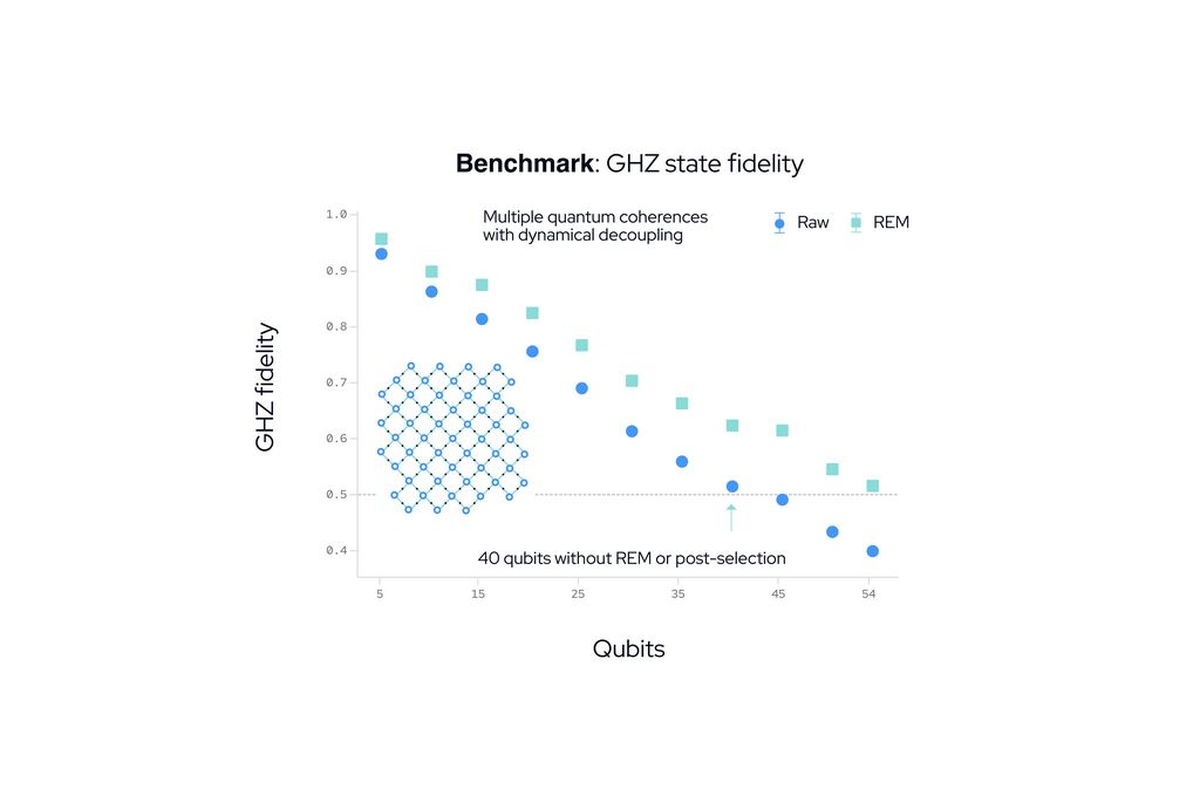
The demonstration used a Greenberger–Horne–Zeilinger (GHZ) state, which IQM describes as a standard benchmark for large-scale entanglement. An automated state-preparation routine selects two-qubit gates while weighing gate fidelity against qubit idle time, choosing the qubits and gate order to minimize idle time as the state is built.
IQM measured a fidelity of 0.515 at 40 qubits without readout error mitigation (REM) and 0.516 at the full 54 qubits with REM applied. Both results were above the classical threshold of 0.500 that separates genuine entanglement from noise.
The result follows roughly a year of hardware and calibration work, including an updated calibration methodology, an improved gate set, and continued deployment of error-reduction tools such as dynamical decoupling and qubit selection. These improvements led to an error rate reduction of up to 50% for quantum operations in the processor.
Craig Ciesla, CTO of IQM Quantum Computers, said: “Entangling the entire chip means every qubit and every connection between them has to work correctly in the same circuit. Getting there came down to being smarter about how we prepare the state itself, choosing the gate order to keep idle time to a minimum. Our current and prospective cloud customers now have the chance to benefit from the same tools and system performance that made this achievement possible.”
The automated state-preparation routine is part of IQM’s broader effort to automate quantum computer operation, alongside its AI-driven agentic calibration work.