

Ixana's Wi-R Technology Takes Non-Radiative Wireless to Glasses, Rings and Soldiers
In a conversation with EEHerald editors Ashish Rao (USA) and Srinivasa Reddy N (India), Shreyas Sen, CTO of Ixana and a Purdue University professor, outlined the origins of the company's human-body communication technology, its target markets, and its product roadmap.
Shreyas traced his path from a bachelor's degree in India to a PhD at Georgia Tech, where he focused on low-power radio circuits and early "AI-enabled" adaptive radios. At Intel Labs he worked on high-speed wireline circuits and was part of the roughly 10-person team that developed the first USB-C prototype, now used in billions of phones. That work showed him that wired communication can be 1,000x to 10,000x more energy-efficient than radiating signals wirelessly. Seeking independent research, he joined Purdue and asked whether signals could be confined around the human body. His first PhD student, Shovan Maity, helped show the answer was yes. With Angik Sarkar on the business side, they began the technology work in 2016 and spun out Ixana in 2020 to scale it.
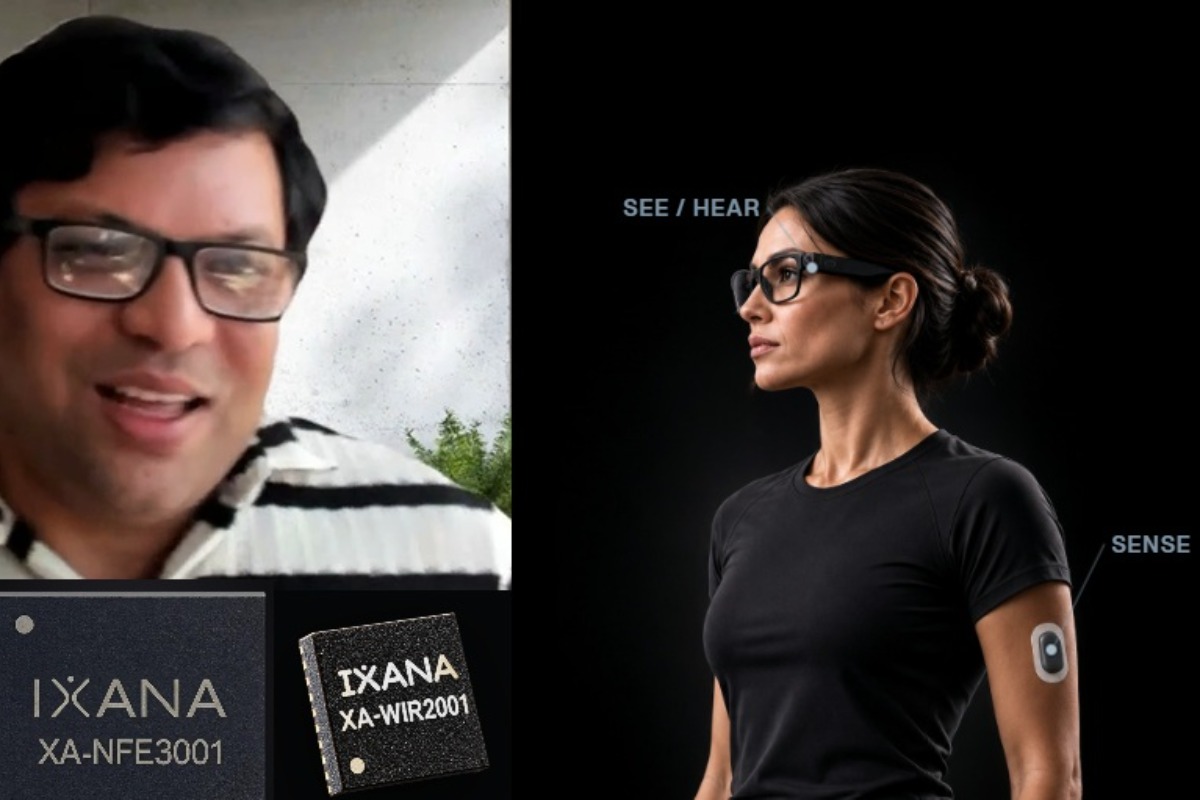
The case for the technology rests on where Shreyas believes AI is heading: off the screen and onto the body, with the phone becoming a "second brain" fed by continuous voice, video and biosignal data from the ears, glasses, ring and watch. ...