

IHS: Magnetic sensors' revenue to reach $1.73B in 2013
Sign in to read and print this article.
IHS says semiconductor magnetic sensors are on track to attain 7 percent revenue growth in year 2013.
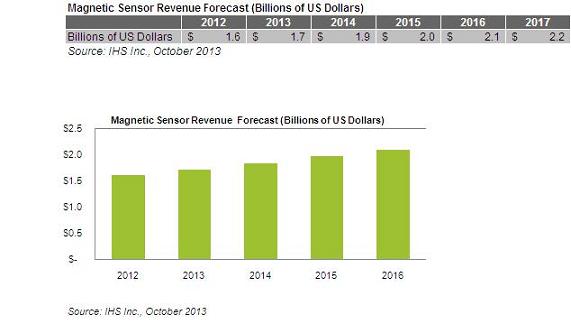
IHS estimates global market revenue for magnetic sensors will reach $1.73 billion at year-end, up from $1.62 billion in 2012. Next year will see revenue expand again by approximately 7 percent to reach $1.85 billion, with growth continuing during the following three years ranging from 4 to 8 percent. By 2017, industry takings will amount to some $2.20 billion, as shown in the below figure.
“More than 5 billion magnetic sensors and switches were sold last year, with automotive accounting for 52 percent of revenue and the consumer and mobile sector making up another 37 percent,” said Richard Dixon, principal analyst for MEMS and sensors at IHS. “The rest was in industry, energy, medical and other smaller applications, such as the transport, aerospace and maritime sectors.” The findings shared by IHS includes: Automotive drives main use In the past the sensors enjoyed a remarkable run of growth, helped to some degree by their key role in vehicle safety systems required by mandates. For instance, electronic stability control (ESC) systems engineered to help prevent vehicle skidding were a potent driving force in consumption, given the use of relatively expensi...
“More than 5 billion magnetic sensors and switches were sold last year, with automotive accounting for 52 percent of revenue and the consumer and mobile sector making up another 37 percent,” said Richard Dixon, principal analyst for MEMS and sensors at IHS. “The rest was in industry, energy, medical and other smaller applications, such as the transport, aerospace and maritime sectors.” The findings shared by IHS includes: Automotive drives main use In the past the sensors enjoyed a remarkable run of growth, helped to some degree by their key role in vehicle safety systems required by mandates. For instance, electronic stability control (ESC) systems engineered to help prevent vehicle skidding were a potent driving force in consumption, given the use of relatively expensi...
You've read this far — sign in to keep reading