

Breakthrough 22nm SOI-CMOS IC with on-chip antenna for sub-Terahertz band transmission
Sign in to read and print this article.
Japan based NEC announced development of 22nm SOI-CMOS IC with on-chip antenna for sub-Terahertz band transmission.
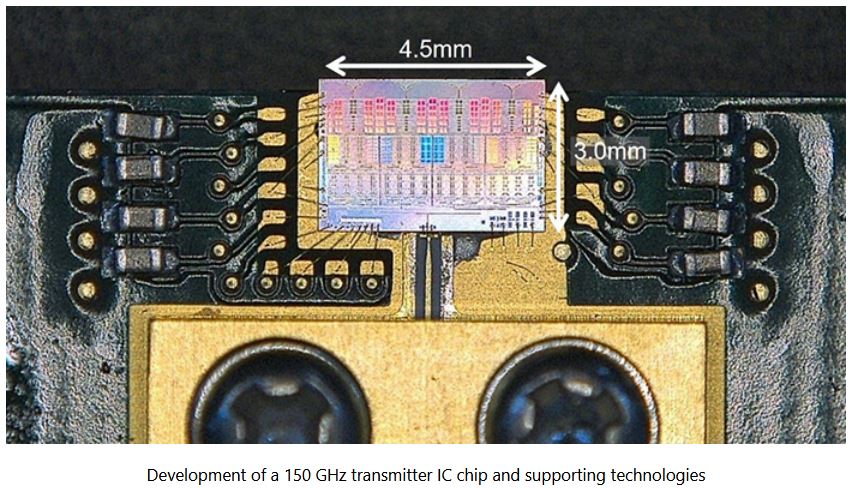
Here are the key points: Integrated 150 GHz Phased Array Technology: NEC achieved a milestone by integrating phased array antenna elements, phase shifters, and transmission amplifiers into a single chip, utilizing innovative RF circuit design. This advancement is pivotal for Beyond 5G and 6G mobile access radio systems. Cost-Effective 22-nm SOI-CMOS Technology: The use of 22-nm SOI-CMOS technology ensures cost efficiency and scalability for mass production. It facilitates the integration of digital, analog, and RF functionalities in a chip, enabling higher frequencies, smaller sizes, and ultimately contributing to lower Total Cost of Ownership (TCO). Leveraging Sub-Terahertz Band for Enhanced Speed and Bandwidth: The move towards the sub-terahertz band (100GHz to 300GHz), particularly the D-band (130 GHz to 174.8 GHz), offers the potential for 100 Gbps class broadband communication—over ten times faster than 5G. This band's wide bandwidth of 10GHz or more presents opportunities for early social implementation, especially in fixed wireless communication systems.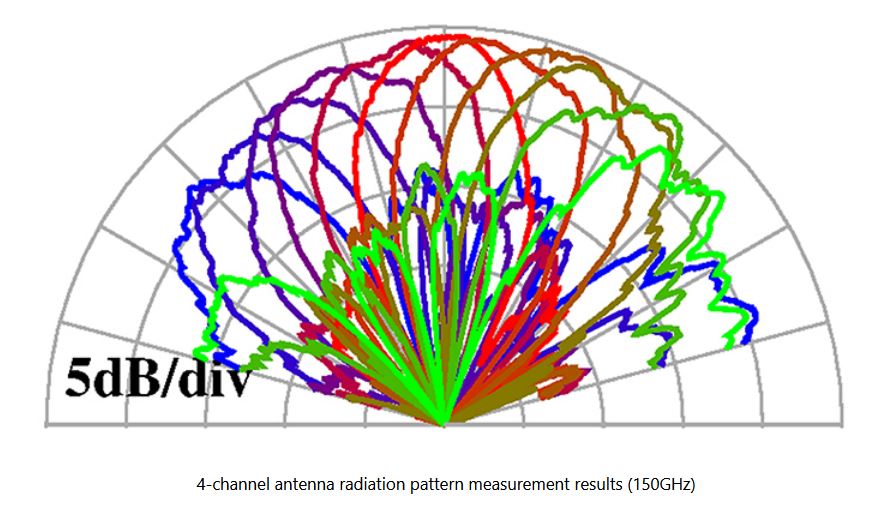
The cha...
Here are the key points: Integrated 150 GHz Phased Array Technology: NEC achieved a milestone by integrating phased array antenna elements, phase shifters, and transmission amplifiers into a single chip, utilizing innovative RF circuit design. This advancement is pivotal for Beyond 5G and 6G mobile access radio systems. Cost-Effective 22-nm SOI-CMOS Technology: The use of 22-nm SOI-CMOS technology ensures cost efficiency and scalability for mass production. It facilitates the integration of digital, analog, and RF functionalities in a chip, enabling higher frequencies, smaller sizes, and ultimately contributing to lower Total Cost of Ownership (TCO). Leveraging Sub-Terahertz Band for Enhanced Speed and Bandwidth: The move towards the sub-terahertz band (100GHz to 300GHz), particularly the D-band (130 GHz to 174.8 GHz), offers the potential for 100 Gbps class broadband communication—over ten times faster than 5G. This band's wide bandwidth of 10GHz or more presents opportunities for early social implementation, especially in fixed wireless communication systems.
The cha...
You've read this far — sign in to keep reading